The global hotel industry is undergoing a major shift toward immersive visual storytelling. Guestroom art is no longer an afterthought; hotel brands collaborate with local art consultants to curate original oil paintings, textured textiles, prints, and sculptural reliefs. This evolution has driven major technological breakthroughs in picture light design:
1. High CRI (95+) and Deep R9 Red Spectrum Retention
Traditional commercial LEDs often sacrificed color rendering for raw lumen efficiency, leaving red pigments, flesh tones, and rich earth tones appearing gray or washed out. Modern Hospitality Picture Lights utilize custom spectrum LEDs boasting a Color Rendering Index (CRI) of 95 to 98 with an R9 score (saturated red rendering) above 90. This ensures that artwork is presented under true daylight-equivalent conditions without color distortion.
2. Zero-UV & Infrared Light Engines to Prevent Artwork Degradation
Historical halogen or incandescent picture lamps emitted substantial ultraviolet (UV) radiation and direct forward heat (Infrared), causing expensive oil paint cracking, paper yellowing, and pigment fading over months of continuous illumination. Today’s solid-state architectural picture lights produce zero UV wavelengths (<300-400nm) and minimal forward radiant heat, safeguarding valuable art assets across long hotel franchise lifespans.
3. Ultra-Slim Backplates with Remote & Micro-Driver Architectures
Architects and interior designers demand minimalist junction box integration. Old picture lights required large, bulky wall surface boxes to conceal heavy transformers. Remington’s engineering team utilizes advanced micro-drivers capable of fitting inside shallow 2" drywall cutouts, standard European wall boxes, or central remote power supply racks (Class 2 drivers housed in hotel electrical closets). This allows backplates to maintain an elegant, flush 3/8" thickness.
4. Asymmetrical Optical Refinement & Anti-Glare Louvers
Illuminating a vertical canvas from a short horizontal arm projection is inherently difficult due to the inverse-square law of light: the top of the canvas receives heavy light intensity while the bottom fades into shadow. Advanced picture lights incorporate asymmetrical linear lenses that direct higher optical intensity downward toward the bottom 60% of the canvas while shaping the beam cutoff angle to prevent guest glare when standing directly beneath the fixture.
5. Integration with Central Hotel Automation (DALI / 0-10V / Phase Dimming)
As luxury hotels transition to automated guestroom management systems (GRMS) like Lutron, Crestron, or Schneider Electric, picture lights must dim smoothly down to 0.1% without flicker or color shift. Remington integrates universal 5-in-1 dimming drivers compatible with TRIAC, ELV, 0-10V, and DALI protocols directly into our standard spec packages.

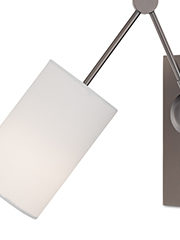 Direct Wall Box Mount
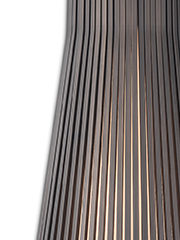 Frame-Mounted Arm
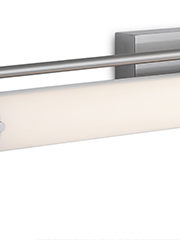 Slim Canopy Remote Driver
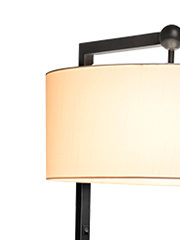 Asymmetric Wall Wash (120°)
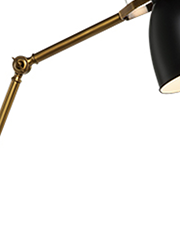 Narrow Focus Lens (45°)
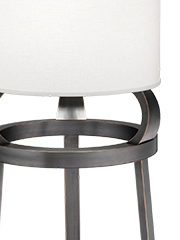 Frosted Soft Graze
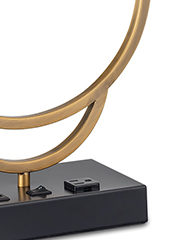 Hand-Rubbed Antique Brass
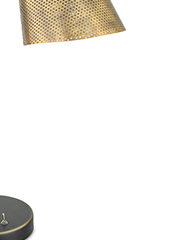 PVD Satin Black
 Brushed Nickel & Chrome
 UL / ETL Listed (US & CA)
 ADA Corridor Compliant (<4")
 Title 24 / JA8 Compliant