New
Reading
Projects
Talk To A Specialist +1 717 737 7120

Top Trusted Project Lighting Factories & Custom Sourcing Guide

Architectural, Commercial & Decorative Lighting Engineering: E-E-A-T Verified Sourcing Insights for Global Hotel Chains, Resort Developers, and Commercial Specifiers

1932
Manufacturing Heritage
94+
Years of OEM/ODM Mastery
30+
Approved Hotel Brands
100%
UL / ETL Listed Compliance

Whitepaper: Evaluating Top Trusted Project Lighting Factories & Manufacturing Ecosystems

Navigating global supply chains for multi-million dollar architectural, commercial, and hospitality lighting contracts demands rigorous technical due diligence. Selecting the right project lighting manufacturer is not merely an exercise in finding low bill-of-materials (BOM) costs; it requires partnering with an enterprise capable of executing precise photometric specifications, adhering to stringent regional safety certifications, and offering robust value engineering without sacrificing design intent.

Since our founding in 1932 (originally as Remington Lamp Company in Philadelphia, now operating global state-of-the-art manufacturing facilities), we have established a 94-year continuous legacy in specialized contract lighting manufacturing. Our operations span bespoke guestroom desk lamps, heavy-duty commercial wall sconces, large-scale public area chandeliers, fiber-optic architectural installations, and IP67-rated exterior motif lighting for municipal and resort developments.

Core Pillars of Enterprise Manufacturing Reliability

When procurement managers, interior architects, and lighting specifiers evaluate project lighting factories, five technical standard vectors dictate project success:

  • In-House Photometric & Electrical Engineering: Facilities must possess integrated goniophotometers and integrating spheres to generate authentic IES/LDT files, verifying Lumen-per-Watt efficacy, Color Rendering Index (CRI Ra > 90, R9 > 50), and chromaticity consistency within a 3-step MacAdam ellipse.
  • UL/ETL/CE Compliance & Regulatory Traceability: Commercial lighting installations require certified wiring assemblies, correct wire gauge selection, grounded metalwork, thermal cutoff protection, and low-voltage driver containment complying with UL 1598, UL 153, and CE LVD/EMC directives.
  • Anti-Corrosive Metalworking & Surface Finishing: Multi-layer electroplating, physical vapor deposition (PVD), and outdoor-grade thermosetting powder coatings must pass 96-hour neutral salt spray (NSS) testing to prevent finish oxidation in high-humidity coastal resorts.
  • Integrated Power & IoT Hardware: Modern contract lamps require seamlessly integrated USB-A, 45W USB-C Power Delivery (PD) modules, tamper-resistant AC outlets, and smart dimming protocols (DALI-2, 0-10V, Bluetooth Mesh, Phase-cut).
  • Vibration & Transit Packaging Integrity: Custom ISTA-3A drop-test certified packaging engineered to protect fragile hand-blown glass, optical acrylics, and delicate metal branches during intermodal transit.
Enterprise OEM/ODM Advantage

Why Leading Specifiers Partner with Our Factory Network

From conceptual render to job-site pallet delivery, our manufacturing infrastructure minimizes project risk and accelerates rollout timelines.

Custom Engineering & CAD Detailing

We convert interior designers' hand sketches, PDF concept decks, or complex 3D BIM models into submittal-ready CAD shop drawings within 72 hours, ensuring full structural and electrical integrity.

Brand-Approved Specifications

Long-standing approved vendor status for Marriott, Hilton, Hyatt, InterContinental, and Wyndham brands. Our luminaires strictly meet brand-specific ergonomics, wattage limits, and safety standards.

Advanced Optoelectronics & Fiber Optics

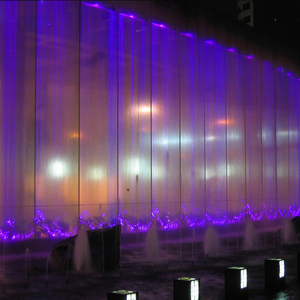
Specialized production lines for high-density PMMA side-glow and end-glow fiber optic systems, dynamic RGBW waterfall curtains, solar starburst arrays, and custom optic lenses.

Rigorous Prototype & Mock-Up Release

Dedicated physical mock-up production lines allow buyers to review physical finish swatches, shade fabric weave density, and joinery tolerances before committing to full batch manufacturing.

Value Engineering (VE) Expertise

When budget constraints threaten project feasibility, our engineers suggest intelligent material substitutions—such as hydroformed aluminum over spun brass or PVD coatings over electroplating—without altering aesthetics.

Phased Logistics & Attic Stock Management

Shipments labeled by floor, zone, or room type to streamline job-site installation. We archive all component tooling for 10+ years to guarantee spare parts availability for operating properties.

Future Procurement & Product Development Trends (2025–2030)

The contract lighting landscape is undergoing a technological and ecological transformation. B2B purchasers and developers must align with project lighting factories that actively invest in next-generation optics, sustainable manufacturing, and smart building integration.

Key Technological & Sourcing Drivers:

  • Human-Centric & Circadian Lighting Integration: Shift toward dynamic CCT tuning (2200K to 6500K) and high-CRI spectrums that simulate natural daylight, proven to enhance guest sleep cycles in luxury hotels and increase employee productivity in commercial offices.
  • PoE (Power over Ethernet) & Low-Voltage Infrastructure: Architectural sconces and ceiling fixtures increasingly utilize DC microgrids and PoE control, reducing electrical installation labor costs by up to 30% while enabling granular energy monitoring per luminaire.
  • Sustainable Material Lifecycle & Circularity: Transition to recycled marine grade aluminum alloys (e.g., 6063-T6), organic shade linens, halogen-free wiring, and non-toxic powder coatings to assist developers in attaining LEED v4.1 and WELL Building Standard certifications.
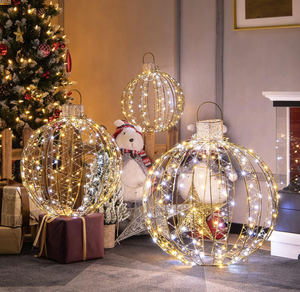
  • Solid-State Outdoor & Solar-Hybrid Innovation: Exterior landscape, motif light balls, and firefly garden lights are moving toward monocrystalline PERC solar panels, high-density LiFePO4 battery storage, and dynamic motion sensing to eliminate trenching costs in resort landscaping.
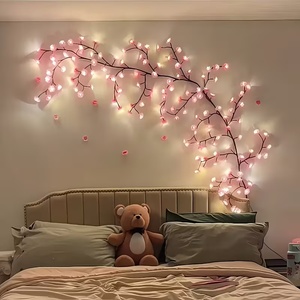
  • Miniaturized Fiber Optics & Micro-LED Accents: High-end dining spaces, ballrooms, and luxury residential features demand invisible light sources. End-emitting 0.75mm optic fiber strands and micro-LED willow vine elements offer immersion without visible glare or fixture bulk.
Technical Reference

Engineering & Application Specification Matrix

Baseline engineering targets for commercial, hospitality, and decorative lighting programs across primary space classifications.

Space / Application Recommended Luminaire Style Ingress / Safety Rating Optimal CCT & CRI Control & Hardware Integration
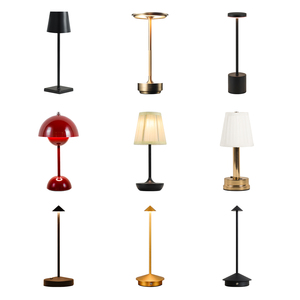
Guestroom Nightstand / Desk Metal Base Table Lamp w/ Fabric Shade UL 153 / Dry Location 2700K | CRI 90+ Dual USB-C (45W PD) + Tamper-Resistant AC Outlet
Hotel Bedside / Headboard Articulating Reading Sconce / Wall Light UL 1598 / Dry-Damp Location 2700K - 3000K | CRI 90+ Independent Rocker / Micro-Push Dimmer Switches
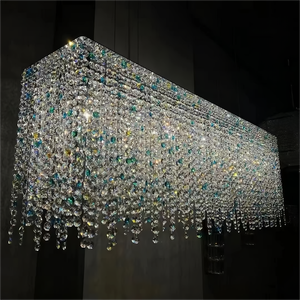
Lobby / Atrium / Staircase Custom Crystal Ring Chandelier / Pendant UL 1598 / Dry Location 2400K - 2700K | CRI 92+ 0-10V / DALI-2 Dimmable Drivers, Emergency Backup
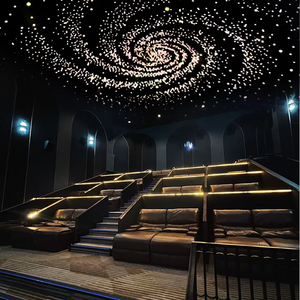
Restaurant & Wedding Aisle Fiber Optic Waterfall / Starry Sky Ceiling CE EMC / Low Voltage DC RGBW Dynamic Tuning DMX512 Controller / RF Remote / Smart App Sync
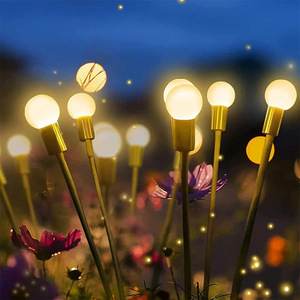
Resort Landscape & Gardens Solar Swaying Firefly & Motif Ball Lights IP65 / IP67 Wet Location 2200K Warm Gold / RGB Dusk-to-Dawn Light Sensor, Solar Lithium Storage
Commercial Corridor & Entry ADA-Compliant Low Profile Wall Sconce UL 1598 / Damp Location 3000K | CRI 80+ Occupancy Sensor Bypass / Maintained Night Light
Frequently Asked Questions

B2B Sourcing & Factory Procurement Guide

Clear answers to essential questions asked by international buyers, procurement firms, and general contractors during project sourcing.

How do top project lighting factories calculate lead times for custom architectural orders?
Custom project lighting manufacturing lead times are calculated across four primary milestones: (1) Shop drawing submittal and engineering review (1–2 weeks); (2) Finish/fabric physical sample approval and mock-up sign-off (2–3 weeks); (3) Mass component fabrication, metal spinning/stamping, optical assembly, and UL safety testing (4–6 weeks); (4) Quality assurance packing and ocean freight shipping (3–5 weeks). Total lead time typically ranges from 8 to 12 weeks depending on luminaire complexity. Stocked capsule collections (such as quick-ship hospitality lines) can be dispatched within 5 to 10 business days.
What electrical certifications are required when importing project lighting into North America and Europe?
For North America (USA & Canada), luminaires must carry UL (Underwriters Laboratories) or ETL (Intertek) marks under safety standards UL 1598 (fixed luminaires) or UL 153 (portable lamps). Integrated outlets must comply with NEC tamper-resistant codes. For Europe and the UK, products require CE-LVD (Low Voltage Directive), CE-EMC (Electromagnetic Compatibility), RoHS compliance, and UKCA marks. Outdoor fixtures across both regions require IP65 or IP67 ingress protection certificates issued by accredited third-party laboratories (e.g., SGS, TÜV, Intertek).
Can your factory build bespoke fixtures directly from an interior designer’s render or sketch?
Yes. Our internal engineering department specializes in turning conceptual visual renders, 3D SketchUp files, and specification sheets into complete production drawings. We perform structural load calculations for large chandeliers, model photometric distributions, engineer custom mounting brackets, and provide material samples (metal finishes, blown glass density, acrylic light diffusers) for designer sign-off prior to batch release.
How do you prevent color temperature and finish discrepancies across multi-phase hotel projects?
To prevent color temperature drift, we source LED chips strictly within a 3-step MacAdam ellipse tolerance from single-bin manufacturing batches (e.g., Cree, Lumileds, OSRAM). For metallic finishes—such as brushed brass, oil-rubbed bronze, or matte black—we retain physical master control chips in our QA lab. Every subsequent production batch is spectrophotometrically matched against the approved master chip to guarantee zero visual shift between guestroom corridors and public spaces.
What packaging standards are used to ensure zero damage during international shipping?
All contract orders undergo ISTA-3A packaged product drop-testing. Luminaires are encapsulated in custom-molded high-density expandable polyethylene (EPE) foam or drop-in polyurethane foam-in-place systems, enclosed inside heavy-duty 5-ply or 7-ply corrugated export cartons. High-value crystal chandeliers, glass spheres, and long fiber optic components are cradled in reinforced plywood crates equipped with shock and tilt indicators.
What is your factory's Minimum Order Quantity (MOQ) for custom project lighting?
Our factory supports flexible MOQs tailored to project scales. For standard guestroom lamp rollouts, typical batch MOQs start at 50 to 100 units per style. For large public area features, custom feature pendants, or high-value lobby chandeliers, we support single-unit (MOQ 1) custom production runs. Quick-ship programs have zero MOQ requirements.

Factory Audit Checklist: How to Qualify a Project Lighting Manufacturer

Before issuing a Purchase Order (PO) to an overseas lighting supplier, procurement teams must verify that the factory operates under strict ISO 9001 quality management systems. Our manufacturing facilities welcome third-party factory audits (such as Bureau Veritas, SGS, or QIMA) and follow an uncompromised 6-stage Quality Assurance framework:

1. IQC (Incoming Quality Control)

Testing raw brass tubes, aluminum extrusions, LED driver power factors, and shade fabrics upon arrival. Non-conforming raw materials are rejected at the loading dock.

2. Metalwork & CNC Precision

Laser cutting, automated CNC turning, and seamless robotic welding ensure exact dimensional tolerances across thousands of identical room-set components.

3. Surface Preparation

Ultrasonic degreasing, multi-stage electroplating, and automated electrostatic powder coating to guarantee adhesion and scratch resistance under heavy commercial use.

4. 100% Hi-Pot & Continuity Test

Every single assembled electrical luminaire undergoes dielectric voltage-withstand (Hi-Pot) testing and earth ground continuity checks to prevent electrical shock hazards.

5. Burn-In & Thermal Aging

LED drivers and luminaires undergo a continuous 24-to-48-hour burn-in aging test in thermal chambers to eliminate infant mortality of electronic components.

6. OQC (Outgoing Quality Control)

Final pre-shipment sampling inspection per AQL 1.5/4.0 standards, checking finish purity, switch tactile feel, cord length, and carton labeling integrity.

Ready to Engineer Your Project Lighting Scheme?

Submit your project specification book, CAD drawings, or target budget to our senior engineering team. We deliver detailed shop drawings, material samples, and factory-direct pricing within 48 hours.

Get Catalog