Explore our export-certified modular lighting solutions engineered for high durability, structural adaptability, thermal resilience, and intelligent protocol integration.

Building on over nine decades of luminaire manufacturing experience, our enterprise infrastructure bridges custom architectural design with rigorous global compliance.
Our in-house structural and optical engineers translate architectural sketches, CAD specifications, and lighting calculations into fully compliant modular prototypes. We deliver precise shop drawings, photometric IES files, and finish samples prior to mass fabrication.
Every modular lighting solution is manufactured under strict ISO9001 management protocols. Product lines carry comprehensive certifications including UL 1598, ETL, CE, RoHS, and DLC 5.1 Premium, ensuring seamless approval by local inspectors and engineering authorities.
Industrial data centers, high-bay workshops, and tropical architectural installations demand thermal engineering that exceeds standard commercial limits. Our extruded 6063-T5 aluminum heat sinks maintain junction temperatures below 85°C even in 50°C ambient environments.
A technical side-by-side evaluation of system maintenance, installation velocity, total cost of ownership (TCO), and operational flexibility.
| Specification & Performance Metric | Modular LED Trunking & Matrix Systems | Conventional Fixed LED Fixtures | Commercial Impact & ROI |
|---|---|---|---|
| Installation Speed & Labor Costs | Toolless click-in trunking; pre-wired continuous busbars (Up to 70% faster) | Hardwired individual point connections requiring junction boxes | Substantial reduction in on-site electrical labor expenses |
| Thermal & Driver Serviceability | Independent replaceable driver modules; quick-connector PCB assemblies | Integrated non-replaceable drivers requiring full fixture replacement | Lowers 10-year Total Cost of Ownership (TCO) by 45% |
| Optical Adaptability | Interchangeable optics (30°, 60°, 90°, 120°, Asymmetric, Double-Asymmetric) | Fixed lens profile cast into housing during manufacturing | Allows re-zone lighting changes without structural rewiring |
| Control Protocol Integration | Native DALI-2, DMX512, 0-10V, and Wireless Mesh (Zigbee/SmartThings) | Basic ON/OFF or primitive phase-cut wall dimming | Enables automated building energy management and daylight harvesting |
| High-Ambient Operation | Active heat-pipe & 6063-T5 extruded thermal channels rated to 50°C+ | Standard passive stamped sheet metal rated to 25°C - 35°C max | Prevents lumen depreciation and premature driver failure in severe duty |
SEO & Procurement Note: Modular lighting systems represent a paradigm shift in commercial procurement. By decoupling structural mounting tracks, optical engines, and power conversion modules, enterprise facilities cut maintenance downtime by up to 80% while retaining continuous compatibility with evolving IoT control protocols.
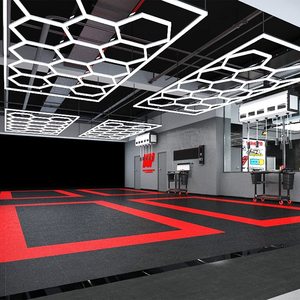
In the contemporary landscape of industrial, commercial, and architectural development, lighting is no longer treated as a static utility. Instead, specifying engineers, procurement executives, and master architects view illumination through the lens of modular adaptability, system longevity, and lifecycle cost optimization. As leading global modular lighting manufacturers and exporters, our engineering teams address the core challenges of modern building infrastructures: managing high thermal loads, eliminating installation bottlenecks, and providing flawless color rendering across diverse spatial environments.
Modular lighting architecture relies on the strict separation of functional building blocks: the mechanical carrier or track, the optical light engine (LED board and lenses), the electrical conversion gear (LED driver and surge protectors), and the control intelligence (DALI-2 sensors, DMX512 transceivers, or IoT wireless modules). This structural modularity guarantees that an upgrade to smart controls or an adjustment in optical beam distribution does not require discarding the physical infrastructure already installed in the building's ceiling canopy or structural trusses.
The global lighting industry is undergoing rapid technological convergence. B2B buyers seeking trusted export partners must look beyond baseline lumen-per-watt figures and evaluate manufacturers across five critical engineering vectors:
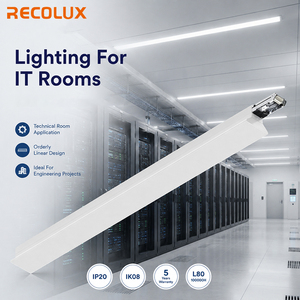
1. Thermal Management under Extreme Ambient Temperatures (50°C Ratings): Standard commercial luminaires are designed to operate in ambient temperatures capped between 25°C and 35°C. However, real-world industrial installations—such as IT server rooms, manufacturing workshops, glass factories, and tropical logistics hubs—frequently experience ambient temperatures exceeding 45°C to 50°C. Advanced modular linear trunking systems utilize high-grade 6063-T5 extruded aluminum heat sinks paired with direct-phase thermal interface materials (TIM). This ensures that the junction temperature ($T_j$) of the LED chips remains comfortably under 85°C, preserving an L70/B10 lifespan in excess of 100,000 operational hours.
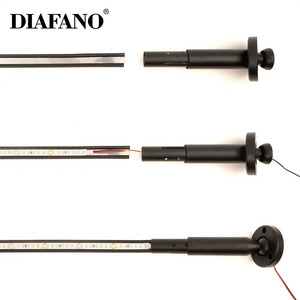
2. High-Density COB & Skyline Architectural Form Factors: For modern hospitality, luxury residential, and boutique retail interiors, bulky light fixtures are obsolete. The market has embraced skyline linear profiles—ultra-thin, high-tension stainless steel straps fitted with continuous Chip-on-Board (COB) LED strips. Capable of 360-degree rotation and micro-level field cutting, these modular systems provide indirect up-lighting and direct down-lighting simultaneously, achieving clean architectural lines without visible diode pixelation.
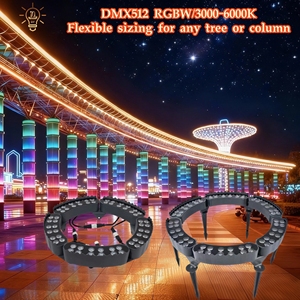
3. Advanced Digital Control Protocols (DALI-2 & DMX512 RDM): Modern facilities require granular control over light intensity, color temperature, and dynamic scenes. Modular commercial systems incorporate multi-channel DALI-2 drivers for office linear trunking, allowing automated daylight harvesting and emergency lighting testing. For outdoor landscape framing, column wraps, and stadium floods, DMX512 with Remote Device Management (RDM) permits individual pixel control across complex ring lighting geometries and multi-module flood arrays.
4. Industrial-Grade Environmental Ingress Protection (IP65, IP66 & IP54): Environmental resilience is non-negotiable for modular outdoor and specialized indoor applications. Modular flood lights and perimeter ring lights utilize pressure-equalizing breather valves, high-tensile silicone gaskets, and electrostatically applied anti-corrosion powder coatings to achieve IP66 ingress protection against high-pressure water jets and abrasive dust particulates.
Procurement teams navigating global supply chains are increasingly standardizing on modular lighting platforms to streamline SKU management and safeguard project timelines. Key trends shaping procurement decisions include:
SKU Consolidation & Inventory Efficiency: Sourcing traditional non-modular fixtures forces distributors to stock hundreds of unique luminaire SKUs (varying by wattage, color temperature, beam angle, and control type). Modular systems allow buyers to stock universal housing rails and combine them with interchangeable optical lenses and field-selectable CCT/wattage drivers. This reduces warehouse inventory carrying costs by up to 60% while maintaining absolute flexibility for client customization.
Compliance-First Export Documentation: Crossing international borders requires absolute compliance with local electrical safety codes. Top-tier exporters provide comprehensive documentation packages, including UL 1598 listed files for North America, CE Declaration of Conformity for the European Economic Area, and DLC (DesignLights Consortium) 5.1 Premium listings for utility rebate qualification.
Rapid Prototype & Mock-Up Approvals: Contract projects—especially large hospitality rollouts and commercial tower refurbishments—demand fast sample turnarounds. Trusted manufacturers utilize rapid prototyping, multi-axis CNC machining, and automated goniophotometer testing to deliver production-grade mock-up samples within 7 to 10 working days, significantly compressing project execution cycles.
Direct technical and procurement answers addressing the most common questions from electrical contractors, lighting designers, and global importers.
Modular LED trunking systems feature pre-engineered continuous busbars with 5 to 11 internal electrical wires. This allows power feed, emergency battery back-up, and DALI-2/0-10V control signals to run within a single track. Installation requires no conduit threading or junction boxes, cutting labor time by up to 70%.
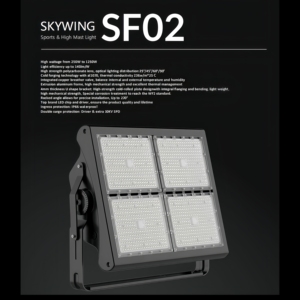
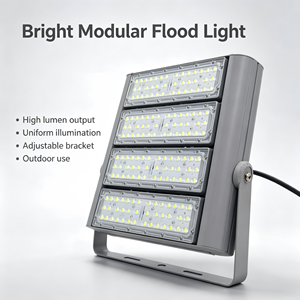
High-wattage modular flood lights utilize independent die-cast aluminum heat sink blocks for each 100W–200W module. Air-gap convection channels between the modules prevent thermal stacking, allowing each module to dissipate heat independently and ensuring stable operation even in extreme high-ambient conditions.
Yes. Drawing on our 94-year heritage in OEM and contract manufacturing, our engineering department customizes housing lengths, powder-coat RAL finishes, optical beam distributions, CCT ranges, and custom mounting brackets to match exact architect or brand specification guidelines.
Depending on the targeted destination market, our fixtures carry UL 1598, ETL listing, CE compliance, RoHS material safety compliance, IP65/IP66 ingress protection certificates, and DLC Premium efficiency qualifications. Full photometric IES files and test reports are supplied with every quotation.
Standard modular catalog components are maintained in stock for rapid dispatch. Custom engineering orders and large-scale project manufacturing runs typically require 2 to 4 weeks depending on production volume, with expedited mock-up samples delivered in 7 to 10 days.
Our DMX512 modular ring lights utilize expanding aluminum segment joins. By adding or removing modular arc segments, the ring diameter can be adjusted from 0.6 meters to 2.9 meters without replacing the electrical harness or optical drivers, allowing the fixture to adapt as trees grow over time.
Connect directly with our senior application engineers and international sales specialists. Submit your architectural drawings, BOQ details, or custom OEM requirements today for a comprehensive engineering proposal and competitive wholesale pricing.
Get a Quote