Engineered for contract hospitality, architectural developments, and high-traffic interior projects with full European CE compliance, structural tipping stability, and integrated power options.
CE / LVD
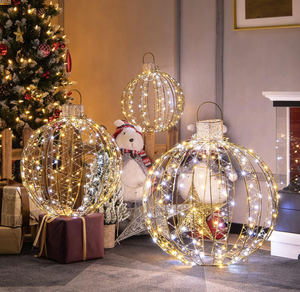
Christmas LED Light Balls for Tree Outside Lighted Sphere Holiday Decor
The Architectural Arc Lamp: CE Certification & Mechanical Engineering Whitepaper
As commercial interior architecture shifts toward expansive open-plan lounges, high-ceiling luxury hotel suites, and executive workspaces, the demand for CE Certified Arc Lamp Manufacturers & Suppliers has surged globally. Arc lamps—characterized by their extended cantilevered arms, heavy balancing counter-bases, and focalized overhead illumination—present unique mechanical, electrical, and photometric engineering challenges that differentiate them from standard floor lamps.
Sourcing commercial-grade arc lighting requires strict alignment with European Union harmonized standards. Unlike residential fixtures, commercial arc lamps installed in hospitality, high-end residential developments, and commercial real estate projects must guarantee continuous electrical safety, electromagnetic compatibility, zero structural deflection drift, and complete tip-over prevention under operational loads.
Core Procurement Insight: A authentic CE Certified Arc Lamp must comply with two primary directives under EU law: the Low Voltage Directive (LVD) 2014/35/EU for electrical insulation, creepage, and thermal stability, and the Electromagnetic Compatibility (EMC) Directive 2014/30/EU to prevent high-frequency interference with commercial Wi-Fi and building management systems (BMS).
The defining structural component of an arc floor lamp is its extended cantilever arch. According to international structural standards (such as EN 60598-2-4 for portable general-purpose luminaires), arc lamps must undergo rigorous 8-degree incline tilt testing without tipping. Professional manufacturers achieve structural equilibrium through calculated counter-weight ratios:
Solid Marble or Heavy-Gauge Steel Base Cores: Precision-milled bases weighing between 18kg and 45kg to anchor cantilevered spans reaching up to 2.5 meters.
Cold-Drawn Telescopic Stainless Steel Tubing: Multi-section seamless steel or extruded aluminum stems treated with anti-fatigue tempering to prevent sagging over decades of use.
Friction-Locked Pivot & Swivel Joints: Hardened brass or stainless steel internal clutch mechanisms that allow smooth shade positioning without mechanical slippage.
Integrated Power & Dimming
Modern commercial arc lamps incorporate base-housed step-less rotary dimmers, push-button foot switches, and optional USB-A/USB-C charging ports certified to EN 62368-1 safety standards.
Thermal Dissipation
Custom aluminum heat-sink enclosures integrated into the shade assembly ensure junction temperatures for LED arrays remain below 65°C, preventing early lumen degradation.
Modular Knock-Down Logistics
Engineered for global freight efficiency, arch stems are split into precision male-female threaded sleeves that pass ISTA-3A transit drop testing to lower shipping volume by up to 60%.
Future Procurement & Development Trends in Commercial Arc Lighting (2025–2030)
As commercial real estate specifiers and hospitality procurement directors evaluate lighting solutions for long-term ROI, manufacturing processes for arc lamps and commercial architectural fixtures are undergoing rapid technological evolution. Sourcing partners must adapt to four pivotal industry trends:
Trend 1: Smart Human-Centric Lighting (HCL) & Tunable White Integration
Static color temperature is being replaced by dynamic Tunable White LED engines (2200K warm candle light to 6500K daylight crispness). Next-generation CE certified arc lamps utilize DALI-2, Zigbee 3.0, and Matter-compliant drivers. This allows arc lamps to automatically synchronize color temperature with circadian rhythms throughout the day, enhancing guest well-being in luxury hotels and executive suites.
Global architectural firms now require Environmental Product Declarations (EPDs) and compliance with EU RoHS 3 (Directive 2015/863). Lead-free brass alloys, 100% recycled aluminum extrusions, and zero-VOC waterborne powder coatings are becoming prerequisite procurement conditions. Furthermore, modular mechanical construction—allowing localized driver or LED engine replacement without disposing of the steel arm—drastically extends fixture life cycles.
To overcome the excessive deadweight of traditional iron arch stems, vanguard manufacturers are employing carbon fiber composites and aircraft-grade 6063-T6 aluminum alloys. Carbon fiber arc stems reduce top-heavy moment arm stress by 40%, enabling sleeker profiles, wider cantilever radiuses, and significantly lower freight shipping weights without sacrificing structural rigidity.
Trend 4: Dual CE / UL Listing Acceleration
Hospitality groups operating across EMEA, APAC, and the Americas demand unified lighting hardware specifications. Progressive manufacturers are designing universal driver enclosures compatible with 90V–277V AC input ranges, equipped with dual CE and UL certifications. This eliminates the need for maintaining separate inventory stock for North American and European property rollouts.
When creating contract tender documents, interior designers and procurement specialists should evaluate prospective suppliers against the following technical parameters:
Evaluation Parameter
Commercial Grade (Standard)
Hospitality / Luxury Grade (Remington Standard)
Regulatory Verification Code
Electrical Safety Standard
Basic Insulation, Single Earth Wire
Reinforced Double Insulation (Class II) / Earthed Class I
Enterprise Manufacturing Capabilities & Quality Control Footprint
Founded in 1932, Remington Lighting (Hisun Lightings) brings over 94 years of uninterrupted lamp-making lineage to global commercial project execution. Originating as a bespoke craft workshop in Philadelphia and evolving into an international contract manufacturing partner, our brand heritage is built on absolute material control and institutional manufacturing memory.
We understand that a single failed luminaire in a 500-room hotel rollout can jeopardize client satisfaction and operator revenue. Therefore, every custom arc lamp and decorative lighting program undergoes a 6-stage Quality Assurance Pipeline prior to shipment:
01
Shop Drawing & Photometrics
Our engineering office converts designer sketches into 3D CAD models, performing virtual FEA stress analysis on cantilever arms and generating IES files for lighting designers.
02
Control Sample Approval
Physical finish master chips, shade fabric swatches, and structural joint samples are dispatched for designer sign-off to ensure zero finish drift during volume production.
03
High-Pot Voltage Testing
100% of manufactured units are subjected to 1500V dielectric withstand voltage testing and earth continuity checks to guarantee absolute electrical isolation.
04
Model Room Prototype Validation
Before mass production releases, full-scale production-intent mock-up lamps are placed in model rooms to evaluate scale, glare, switch access, and cord routing.
05
ISTA-3A Packaging Rigor
Heavy marble bases and extended arch stems are encased in custom-molded high-density EPE foam boxes, drop-tested from 1.2 meters to survive international transit.
06
Attic Stock Maintenance
We archive project tooling data and hold standardized attic stock parts—sockets, shades, diffusers, and drivers—ensuring easy replacements years after installation.
Frequently Asked Questions (FAQ) for B2B Sourcing
Essential compliance, OEM engineering, and logistics answers for procurement directors and hotel specifiers.
What specific documentation proves an Arc Lamp is truly CE Certified?
A valid CE certification requires a formal Declaration of Conformity (DoC) issued by the manufacturer, backed by official test reports from an accredited third-party laboratory (such as SGS, TUV, or Intertek). The test reports must verify compliance with EN 60598-1 and EN 60598-2-4 (LVD) and EN 55015 (EMC). Simply affixing a CE sticker without underlying test reports violates EU market regulations.
Can Remington modify standard arc lamp designs to meet specific hotel brand standards?
Yes. Over 70% of our production involves custom OEM engineering. We regularly adjust stem height, arm reach, shade materials, base finishes, voltage requirements, and power connectivity (such as integrating tamper-resistant UK, EU, or US sockets and USB-C fast-charging ports) to align precisely with brand specification books for Marriott, Hilton, Hyatt, and independent boutique properties.
How do you prevent arc lamps from sagging or leaning over time?
Stem deflection is prevented by using cold-drawn structural steel or high-tensile 6063 aluminum alloys with wall thicknesses between 1.5mm and 2.5mm, depending on arm extension. Internal reinforcement sleeves are fitted at high-stress bending joints, and counter-weight bases are calculated with a 1.5x safety factory to prevent mechanical creep over decades of use.
What is the minimum order quantity (MOQ) for custom CE certified arc lamps?
For catalog modifications or bespoke custom arc lamps, our standard production MOQ starts at 30 to 50 units per design. However, for multi-property rollouts or complete hotel guestroom packages, we accommodate smaller batch pilot runs for mock-up rooms prior to full manufacturing release.
How are heavy marble and metal arc lamp bases protected during ocean container freight?
Bases and delicate shades are packed in modular, multi-box configurations or single-carton drop-tested ISTA-3A compliant packaging. Heavy bases are secured in high-density molded polyolefin foam shells to prevent impact cracking, while arched metal stems are wrapped in anti-scratch protective webbing and stabilized with rigid internal spine inserts.
Partner with a Leading CE Certified Arc Lamp Manufacturer
Send your room counts, designer drawings, or project specification packages. Our engineering team will deliver shop drawings, photometric data, and competitive wholesale pricing within 48 hours.