New
Reading
Projects
Talk To A Specialist +1 717 737 7120
0%

Hotel Guestroom Floor Lamps can transform a room from merely functional into genuinely comfortable. Their warm, adjustable light supports reading, resting, and evening movement without overwhelming the space. Unlike harsh ceiling fixtures, a well-positioned floor lamp creates a softer layer near the bed, lounge chair, or writing desk.

From practical hotel design experience, lighting works best when it serves different guest routines. A tall lamp beside an armchair can illuminate a book while leaving the rest of the room calm. A shaded lamp near the bed can reduce glare during late-night reading. Its height, base stability, cord management, and switch position also influence safety and daily convenience. Small details matter.

Professional hospitality designers often assess color temperature, brightness, maintenance needs, and visual consistency before selecting a lamp. Durable materials and replaceable components can support long-term operation. However, no lighting plan is perfect. A shade may look elegant but cast unwanted shadows. A beautiful base may occupy valuable floor space. These limitations deserve honest review during installation and guest feedback.

Hotel Guestroom Floor Lamps also contribute to the property’s identity. Their shape, finish, and light quality can echo the hotel’s furniture and architectural style. When chosen carefully, they offer practical illumination, visual warmth, and a more memorable guest experience. The best choice is not always the most expensive one. It is the lamp that performs reliably, feels intuitive, and remains comfortable throughout the night.
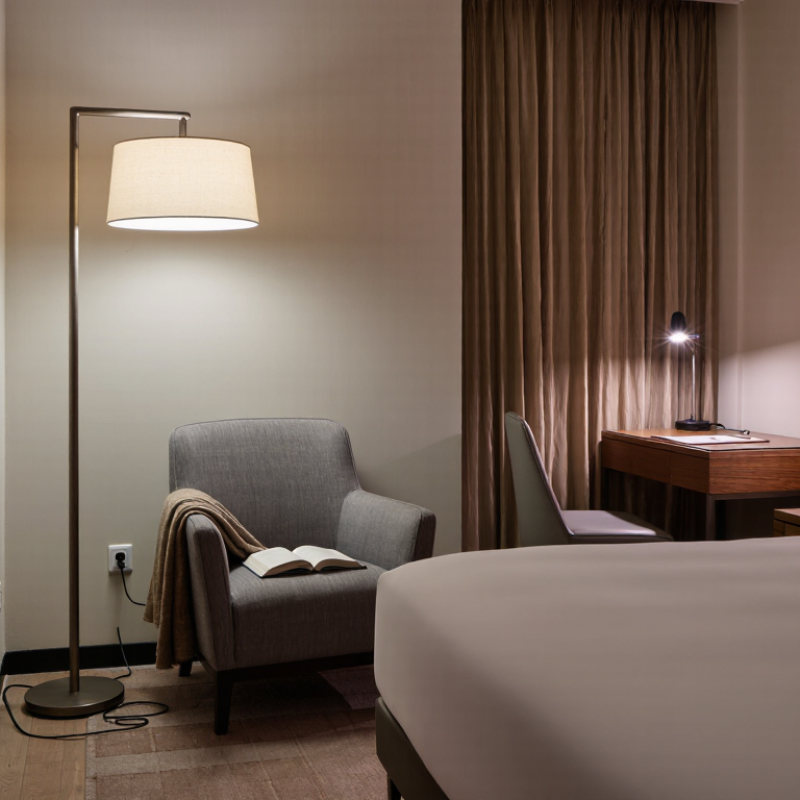
Why Choose Hotel Guestroom Floor Lamps for Better Lighting?

Hotel Guestroom Floor Lamps: Meeting the 100–300 Lux Bedroom Lighting Range

Why Choose Hotel Guestroom Floor Lamps for Better Lighting?

Hotel guestroom floor lamps can help maintain a comfortable bedroom lighting range of 100–300 lux. This level supports circulation, luggage handling, and relaxed evening use without making the room feel harsh. A floor lamp also fills darker corners that ceiling fixtures often leave behind.

In practical guestroom planning, lux should be checked at the bed, chair, and writing surface. A portable light meter gives more reliable results than judging brightness by eye. I prefer a shaded lamp with adjustable output and warm light around 2700–3000K. It softens shadows on the wall and reduces glare on glossy furniture. The lamp should stand beside a reading chair or near the bedside, not block the walking path. A stable base matters, especially when guests move furniture.

Small details affect comfort.

A dimmer is useful, but it is not a complete solution. I have seen lamps rated well on paper still create bright spots across the television screen. Shade height, bulb position, and wall color can change the measured result. Dark finishes may absorb light, while pale walls reflect it more evenly. Designers should test the lamp after installation, with curtains closed and normal furniture in place. The target is not brightness alone. It is a balanced 100–300 lux environment that feels calm, useful, and safe for changing guest needs.

Layered Lighting: Combining Ambient, Task, and Accent Illumination

Hotel guestroom floor lamps support a more comfortable lighting plan than one ceiling fixture alone. They help combine ambient, task, and accent illumination at different heights. In my experience, guests often notice lighting problems after sunset. A bright ceiling light can feel harsh, while a single bedside lamp may leave dark corners. A floor lamp near an armchair spreads gentle light across the room. Its shade can soften glare on polished surfaces and bedding.

Ambient lighting creates a relaxed base for moving around safely. Floor lamps with diffused shades work well beside sofas, desks, or luggage benches. Task lighting needs more direction. A reading chair benefits from a lamp that aims light toward the book, not the guest’s eyes. The right position reduces shadows on pages. It also prevents guests from leaning awkwardly toward a small table lamp. Small details matter here.

Accent illumination adds depth and supports the room’s visual character. A floor lamp can highlight textured curtains, artwork, or a timber wall without making the space feel theatrical. Warm white light usually feels inviting, but color preference varies. I would test the lamp at night, not only in a bright showroom. Some shades look elegant but block too much light. Others create distracting shadows. That imperfect result deserves another adjustment before installation.

Hotel guestroom floor lamps support a more comfortable lighting plan than one ceiling fixture alone. They help combine ambient, task, and accent illumination at different heights. In my experience, guests often notice lighting problems after sunset. A bright ceiling light can feel harsh, while a single bedside lamp may leave dark corners. A floor lamp near an armchair spreads gentle light across the room. Its shade can soften glare on polished surfaces and bedding.

Visual Comfort: Selecting 2700–3000K CCT and CRI 80+ LEDs

Why Choose Hotel Guestroom Floor Lamps for Better Lighting?

A hotel guestroom floor lamp can soften harsh ceiling light and make a room feel more restful. In my experience, guests often use it while reading, unpacking, or speaking quietly at night. The light should feel warm, but not orange. A color temperature between 2700K and 3000K usually creates this balance. It supports relaxation while keeping nearby surfaces visually clear.

CRI matters as much as color temperature. Choose LEDs rated CRI 80 or higher, especially near mirrors, desks, and luggage benches. Better color rendering helps fabrics, skin tones, and printed materials look more natural. A 90+ CRI option can improve visual quality further, although it may increase cost or energy use. Check the actual lamp output, not only the bulb label. Shades can reduce brightness more than expected.

Small details affect comfort.

The lamp should provide enough light for reading without shining directly into a guest’s eyes. A diffused shade, stable base, and accessible switch improve everyday use. I once selected a warm lamp that looked attractive in the showroom, but its shade made the room too dim. That mistake reminded me to test lamps beside the bed, at night, with real materials. Even careful specifications need practical review.

Why Choose Hotel Guestroom Floor Lamps for Better Lighting? – Visual Comfort: Selecting 2700–3000K CCT and CRI 80+ LEDs

Lighting Dimension Recommended Specification Why It Matters in Guestrooms Practical Selection Guidance
Correlated Color Temperature (CCT) 2700–3000K This warm-white range creates a relaxed, residential atmosphere that supports comfort and evening relaxation. Use 2700K for a warmer, more intimate feel and 3000K for a slightly cleaner appearance around desks, reading areas, and seating zones.
Color Rendering Index (CRI) CRI 80 or higher A higher CRI helps colors, fabrics, skin tones, and interior finishes appear more naturally under artificial light. Specify CRI 80+ as a baseline. Consider CRI 90+ where accurate color appearance is especially important, such as dressing or makeup areas.
Light Distribution Diffused, downward, or adjustable distribution Controlled distribution reduces harsh glare while directing useful light toward floors, chairs, tables, or reading positions. Select a shade or diffuser that softens the light source. Adjustable heads are useful when one lamp must serve multiple activities.
Visual Comfort Low-glare design with a concealed or shielded LED source Guests may view the lamp from a bed or seating area, so exposed bright LEDs can cause discomfort and visual distraction. Look for opaque or translucent shades, recessed LED optics, and stable light output without visible hotspots.
Illuminance for Reading Approximately 300–500 lux on the reading surface This range generally provides practical light for reading and other close visual tasks without making the whole room feel overly bright. Confirm the result at the actual chair or bedside position because shade design, lamp height, surface color, and distance affect measured illuminance.
Dimming Capability Compatible dimming from bright task light to low ambient light Dimming allows guests to adapt the atmosphere for reading, relaxing, watching television, or moving around at night. Verify compatibility among the LED driver, dimmer, control system, and wiring. Specify flicker-conscious products for better comfort on camera and during extended use.
Energy Efficiency LED light source with efficient driver and suitable lumen output LEDs generally use less electricity and produce less heat than traditional incandescent sources for comparable light output. Compare delivered lumens, watts, lifetime, and driver performance rather than selecting solely by wattage.
Rated Life Typically 25,000–50,000 hours for many quality LED systems A long rated life can reduce relamping frequency, room interruptions, and maintenance requirements in continuously operated properties. Review the manufacturer’s stated life rating, operating conditions, lumen-maintenance information, and warranty terms before specification.
Color Consistency Consistent CCT and color quality across all guestroom lamps Matching lamps create a coordinated appearance and prevent noticeable differences between bedside, seating, and desk lighting. Purchase lamps from the same product series and confirm the stated color tolerance or binning information when consistency is critical.
Lamp Placement Positioned beside seating, near a desk, or between functional zones Floor lamps can add layered illumination without relying only on ceiling fixtures, improving flexibility and reducing dark areas. Keep switches easy to reach, maintain clear circulation paths, and select a stable base appropriate for the room layout.
Surface and Finish Appearance Warm light with CRI 80+ and finishes coordinated with the interior Appropriate light quality helps upholstery, wood, artwork, and decorative finishes appear balanced and welcoming. Evaluate samples under the proposed 2700–3000K light because the same material can appear different under different CCT and CRI conditions.
Maintenance and Safety Stable construction, protected wiring, and accessible cleaning surfaces Hotel lamps experience frequent cleaning, handling, and extended operating hours, making durability and safe maintenance important. Choose a weighted base, durable shade materials, accessible switches, and components suitable for the intended electrical environment.

Note: Final lighting levels should be verified on site because room dimensions, surface reflectance, mounting height, shade materials, and control settings can significantly affect performance.

Energy Efficiency: Using LEDs That Consume at Least 75% Less Energy

Why Choose Hotel Guestroom Floor Lamps for Better Lighting?

Guestroom floor lamps can deliver focused light without flooding the entire room. That control matters when guests read, work, or relax at night. LED light sources support this balance. The U.S. Department of Energy reports that LEDs use at least 75% less energy than incandescent lighting. They can also last up to 25 times longer. For hotels, fewer lamp replacements can reduce maintenance visits, ladder work, and room disruption.

The savings become practical at scale. A 10-watt LED can replace a 40-watt incandescent lamp for similar task lighting. Used five hours daily, one lamp saves about 54.75 kilowatt-hours annually. Multiply that by 200 guestrooms. The result approaches 10,950 kilowatt-hours saved each year, before considering cooling benefits. The International Energy Agency identifies efficient lighting as an important part of reducing building electricity demand. A properly shaded floor lamp also limits glare on glossy desks and television screens.

The 75% figure is not a guarantee. Poor placement, unsuitable color temperature, or weak controls can still create complaints. I would test lamps beside beds, sofas, and worktables before installation. Warm white light, around 2700–3000 kelvins, often feels more restful. Dimming adds flexibility, but compatibility must be checked carefully. A forgotten driver hum can undermine an otherwise efficient design. Experience suggests that comfort, serviceability, and measured energy use should be reviewed together.

Why Choose Hotel Guestroom Floor Lamps with LED Lighting?

LEDs can deliver similar light output while using at least 75% less energy than traditional incandescent lamps. This comparison assumes approximately 800 lumens, 10 hours of daily operation, and 365 days per year.

Guest Safety: Applying Glare Control, Stable Bases, and Accessible Switches

Why Choose Hotel Guestroom Floor Lamps for Better Lighting?

Guest safety begins with controlled light, not maximum brightness. The CIE 117:1995 framework evaluates discomfort glare through luminance and viewing angles. A shaded floor lamp can keep the bulb below the guest’s direct sightline. This matters when someone wakes at night. Hard reflections from polished desks or mirrors can briefly reduce visual comfort. The World Health Organization reports about 684,000 fatal falls worldwide each year. A poorly placed lamp can add another obstacle.

Tips: Choose a weighted, wide base with non-slip feet. Test it beside a bed, not only in a showroom. The lamp should resist a gentle shoulder bump. Keep its cable behind furniture or inside a protected channel. Place the switch within easy reach from the bed and entry path. A large tactile switch is easier to find in darkness. Avoid tiny controls. They look neat, but they frustrate tired guests.

Good floor lamps also support efficient operation. The U.S. Department of Energy reports that LED lighting uses at least 75% less energy than incandescent lighting and lasts up to 25 times longer. Yet efficiency does not guarantee comfort. Designers can overtrust technical sheets. Observe the lamp at seated and standing eye levels. Check shadows on the floor, especially near luggage. A warmer, dimmable source may feel calmer, though personal preference still varies. Safety testing should include real guest movement, not just a static room.

FAQS

What lighting level is suitable for a hotel guestroom bedroom?

Aim for 100–300 lux across useful bedroom areas. Check the bed, chair, and writing surface. This range supports movement, luggage handling, and relaxed evening use.

Where should a hotel guestroom floor lamp be placed?

Place it beside a reading chair or near the bedside. Keep the walking path clear. A stable base helps when guests move furniture.

Which color temperature feels comfortable in a guestroom?

Choose 2700–3000K for warm, restful light. It should feel warm, not orange. Test it beside real bedding and furniture.

What CRI should guestroom LEDs have?

Select LEDs with CRI 80 or higher. CRI 90+ can show fabrics and skin tones more naturally. It may also increase cost or energy use.

Can a dimmer solve every lighting problem?

No. A dimmer changes output, but it cannot remove bright reflections or uneven shadows. Shade height and bulb position still matter.

How should bedroom lighting brightness be measured?

Use a portable light meter for more reliable readings. Measure after installation, with curtains closed and normal furniture in place. Eye judgment can mislead you.

What shade design helps reduce glare?

Use a diffused shade that hides the direct light source. This can reduce glare on glossy furniture and screens. Shade materials may lower output unexpectedly.

What common mistake should lighting planners avoid?

Do not trust showroom appearance alone. I once chose an attractive warm lamp that made the room too dim. Night testing revealed the problem. That lesson still needs repeating.

Conclusion

Hotel Guestroom Floor Lamps offer a practical way to create comfortable, balanced, and inviting bedroom lighting. They can help meet the recommended 100–300 lux range while supporting a layered lighting plan that combines ambient, task, and accent illumination. Positioned beside a bed, sofa, or reading area, these lamps provide focused light without relying entirely on overhead fixtures.

For visual comfort, choose LED lighting with a warm 2700–3000K color temperature and a CRI of 80 or higher to make the room feel relaxing while displaying colors naturally. Energy-efficient LEDs can consume at least 75% less energy than traditional bulbs, helping reduce operating costs and environmental impact. Guest safety should also guide the design, including effective glare control, stable bases, durable construction, and switches that are easy to reach. Together, these features make floor lamps a valuable element in well-designed hotel guestrooms.


Clara

Clara

Clara is a dedicated marketing professional with a strong understanding of customer needs, market trends, and the practical value of innovative business solutions. As a key member of our team, she combines strategic thinking, clear communication, and in-depth product knowledge to create content......