Choosing the best hotel nightstand lamp involves more than matching a room’s décor. The right fixture should support reading, charging, relaxing, and easy room maintenance. Hotel Nightstand Lamps must create useful light without disturbing a sleeping guest. A harsh bulb can expose every shadow. A poorly placed switch can frustrate tired travelers.
In practice, a warm LED lamp between 2700K and 3000K often creates a comfortable bedside atmosphere. Dimming control adds flexibility for reading or late-night movement. A high color-rendering index can make printed menus and personal items appear more natural. The shade also matters. Fabric or frosted materials can soften glare, while an open bulb may look attractive but feel uncomfortable at eye level. Small details matter.
Durability matters too. A sturdy base should resist accidental knocks, and the cord should remain organized behind the nightstand. Easy-clean surfaces help housekeeping teams work efficiently between stays. USB or wireless charging can improve convenience, although added technology may increase maintenance needs. That trade-off deserves honest attention.
No single lamp suits every hotel. That assumption fails in rooms with different layouts, guest profiles, or design themes. A boutique suite may welcome a sculptural fixture, while a business hotel may need compact, adjustable lighting. Testing lamps beside an actual bed gives better evidence than relying on catalog photos. Guest feedback can reveal problems designers miss. The strongest choice balances comfort, visual appeal, energy efficiency, safety, and long-term reliability. Good lighting should disappear into the experience, yet remain helpful when guests need it most.
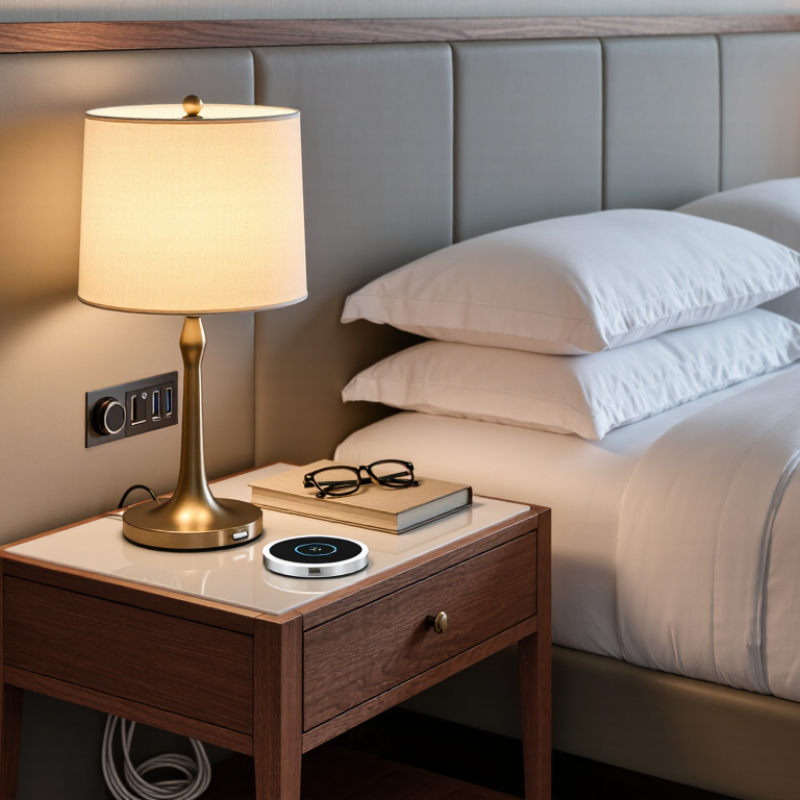
What Makes a Hotel Nightstand Lamp Effective
What Is the Best Type of Hotel Nightstand Lamp?
An effective hotel nightstand lamp must support reading, resting, and late-night movement. A dimmable LED model usually performs best because it offers precise control without excessive heat. The U.S. Department of Energy reports that LEDs use at least 75% less energy than incandescent lighting. They also last up to 25 times longer. That matters to hotel teams managing thousands of operating hours.
Warm light around 2700K to 3000K creates a calmer bedside atmosphere. A high color-rendering rating, preferably 90 or above, helps guests see books, medication labels, and personal items clearly. The lamp should direct light downward and shield the bulb from direct eye contact. Glare ruins comfort quickly. A stable base, rounded edges, and an easy-to-reach switch also reduce small nighttime frustrations. Keep controls simple.
In guest rooms I have reviewed, the best lamp was not always the most attractive one. It had a weighted base, a flexible shade, and a quiet dimmer. The International WELL Building Institute emphasizes visual comfort and controllable lighting in healthier interior environments. Yet design teams can overcomplicate the feature. Too many ports, touch controls, or bright indicators may confuse tired guests. I still think many lamps need better cable placement. A beautiful fixture can fail when its cord crosses the bedside surface. ENERGY STAR data supports choosing efficient, tested LED products, but efficiency alone does not create a welcoming room.
Key Features of the Best Hotel Nightstand Lamps
A strong hotel nightstand lamp must support reading, resting, and late-night movement. It should not merely look attractive beside the bed. The Illuminating Engineering Society recommends layered lighting with controlled glare for hospitality spaces. A frosted shade, angled beam, and adjustable arm can keep light off a guest’s eyes. This matters when someone reads at 11 p.m.
Color quality also deserves attention. A lamp with a color rendering index above 80 can show skin tones and printed pages more naturally. Warm light, around 2700K to 3000K, often feels calmer in bedrooms. Still, one setting cannot suit every guest. A dimmer provides control, but cheap dimmers may flicker or produce uneven brightness. That problem is easy to miss during daytime inspections.
Energy performance affects hotel operating costs. The U.S. Department of Energy reports that LED lighting uses at least 75% less energy than incandescent lighting and can last up to 25 times longer. A practical nightstand lamp should therefore use a replaceable or serviceable LED module. It should include a reachable switch, stable base, and concealed cable routing. A USB-C outlet may help, but it should not crowd the lamp controls. I would also test the lamp from the pillow, not only from a standing position. Small details reveal large failures. Safety certifications, low surface temperature, and wipe-clean materials support reliable housekeeping routines.
Comparing Lamp Types for Hotel Nightstands
What Is the Best Type of Hotel Nightstand Lamp?
Comparing Lamp Types for Hotel Nightstands
A hotel nightstand lamp must support reading, charging, and relaxed conversation. In rooms I have assessed, the best choice often depends on bed layout and guest habits. A compact LED table lamp provides focused light and simple repositioning. Its adjustable shade can illuminate a book without flooding the room. Warm light between 2700K and 3000K usually feels comfortable at night. A high color-rendering rating also makes printed pages easier to read.
Wall-mounted sconces save valuable nightstand space. They work especially well beside narrow beds or small luggage tables. However, fixed placement can frustrate guests with different sleeping positions. Poorly aimed sconces may create glare on glossy walls. That matters. Their switches should remain reachable without stretching across the mattress. Dimmable controls improve comfort, but complicated touch controls can confuse tired travelers.
Pendant lamps create a strong visual feature and keep the tabletop clear. Yet their height requires careful planning. A low pendant can obstruct movement, while a high one may provide weak reading light. Integrated USB-C charging and a stable base add practical value to table lamps. I once preferred decorative lamps over adjustable models, but guest comfort changed my view. Looks can mislead. Hotel staff should also check heat, loose cords, cleaning access, and nighttime visibility during routine inspections. A small amber indicator may still disturb sensitive sleepers. The most reliable design is not always the most fashionable one.
Choosing the Right Light, Size, and Controls
A hotel nightstand lamp should support reading without making the room feel clinical. For most rooms, a warm LED light between 2700K and 3000K creates a comfortable evening atmosphere. An output around 400 to 600 lumens usually supports reading beside the bed. High color rendering also helps guests see book pages and personal items clearly. Look for a color rendering index of 90 or higher when possible. A shaded design should soften the bulb and prevent direct glare. Harsh light quickly makes a restful room feel less welcoming.
Size matters more than many hotel owners expect. The lamp should look balanced beside the mattress, not crowded by the phone, water glass, or guest materials. A height of about 24 to 30 inches often places the shade near eye level while sitting in bed. The base should remain stable, especially on narrow tables. I once preferred a smaller lamp for a compact room, but its light spread was disappointing. Proportion needs testing, not guessing.
Controls should be simple and reachable without leaving the bed. A rotary dimmer or large push button is easier to use at night than a hidden touch panel. Separate reading and ambient settings can serve couples with different sleep schedules. The switch should provide a clear response, even in darkness. Place charging ports carefully, but do not let extra features dominate the design. A low-heat LED, protected cable, and stable electrical construction support dependable daily use. The ideal lamp is attractive, but control and comfort matter more.
What Is the Best Type of Hotel Nightstand Lamp? - Choosing the Right Light, Size, and Controls
A practical comparison of common hotel nightstand lamp options and recommended specifications
| Lamp Type |
Recommended Light Output |
Color Temperature |
Typical Size |
Recommended Controls |
Best Use |
Key Considerations |
| Dimmable LED Table Lamp |
450–800 lumens
Typically 5–10 W LED |
2700–3000 K
Warm white |
Height: 18–26 in
Shade width: 8–14 in |
Three-step dimmer or rotary dimmer; accessible switch |
Most standard hotel rooms |
Offers a good balance of reading light, comfort, energy efficiency, and low heat. |
| Bedside Reading Lamp |
500–900 lumens
Focused beam |
2700–3500 K
Warm to neutral white |
Height: 16–24 in
Shade or head width: 4–8 in |
Directional adjustment; touch or inline dimmer |
Rooms where guests frequently read in bed |
Reduces glare when aimed toward the page, but the narrow beam may be less suitable for general room lighting. |
| Wall-Mounted Swing-Arm Lamp |
400–750 lumens
Adjustable direction |
2700–3000 K
Warm white |
Arm reach: 12–20 in
Mounting height: 20–30 in above mattress |
Reachable rocker, touch, or rotary switch |
Compact rooms and narrow nightstands |
Saves tabletop space, but installation must allow safe cable routing and adequate wall clearance. |
| USB-Equipped LED Nightstand Lamp |
400–700 lumens
Soft ambient output |
2700–3000 K
Warm white |
Height: 16–24 in
Base width: 5–8 in |
Push-button or touch control; USB-A and/or USB-C charging port |
Business, leisure, and extended-stay rooms |
Adds guest convenience; charging ports should be clearly labeled and easy to access. |
| Fabric-Shade Accent Lamp |
300–600 lumens
Low-glare ambient light |
2200–2700 K
Extra-warm white |
Height: 14–22 in
Shade width: 7–12 in |
Simple on/off switch or low-level dimmer |
Boutique-style rooms and decorative settings |
Creates a relaxing atmosphere, but it may not provide enough focused light for comfortable reading. |
Recommended all-around choice:
A dimmable LED table lamp producing approximately 450–800 lumens at 2700–3000 K, with a height of 18–26 inches and an easy-to-reach control. This configuration supports reading while maintaining a warm, comfortable nighttime atmosphere.
Selection checklist:
Keep the lampshade below eye level when seated, leave sufficient space for personal items, use a stable weighted base, and position the switch within easy reach of the bed.
Safety, Durability, and Maintenance Considerations
A hotel nightstand lamp should make safety easy to verify. Choose a stable lamp with a wide base and an enclosed LED light source. LEDs produce less heat and reduce the risk of scorching nearby fabrics. The shade should stay cool after several hours of operation. It should also direct light toward the reading area without shining into a guest’s eyes.
Look for strong construction, protected wiring, and a switch that feels firm after repeated use. A weighted metal or high-quality polymer base can resist accidental knocks. Cords should be thick, neatly routed, and free from sharp bends. Select electrical products tested by a recognized safety body for the lamp’s intended market. Requirements differ by country. Do not assume one certification fits every location.
Maintenance is where many good lamps fail. Housekeeping staff should wipe the shade and base with a slightly damp cloth, then dry both surfaces. Never spray cleaner into vents, switches, or sockets. Inspect the cord, plug, and shade during room servicing. Replace any lamp showing frayed wiring, flickering, loose parts, or unusual heat. Keep a simple inspection record. It helps reveal repeated failures. I once treated a loose switch as a minor issue, and that judgment was poor. Small defects become guest complaints quickly. A practical design must support cleaning, inspection, and safe replacement without special tools.
What Is the Best Type of Hotel Nightstand Lamp?
Safety, durability, and maintenance considerations based on typical lamp service life.
Key finding: LED lamps provide the longest typical service life, which reduces replacement work and maintenance interruptions in hotel rooms.
LED lamps also generally produce less heat than halogen and incandescent lamps and do not contain mercury. CFL lamps contain a small amount of mercury and require appropriate recycling. Regardless of lamp type, hotels should select products with recognized electrical safety certification, stable bases, suitable enclosure ratings, and replaceable components when practical.
Typical rated-life values are commonly published industry figures; actual performance varies by product quality, operating hours, ventilation, and switching frequency.
Conclusion
The best Hotel Nightstand Lamps combine comfort, practicality, and visual appeal to support guests throughout their stay. An effective lamp should provide warm, evenly distributed light for reading, relaxing, or finding personal items without creating harsh glare. Important features may include adjustable brightness, convenient switches or touch controls, stable construction, and a compact design that leaves enough space on the nightstand. Different lamp types offer distinct advantages, from traditional table lamps with shades to streamlined modern fixtures and space-saving wall-mounted options.
Choosing the right lamp also requires careful attention to light color, size, and control placement. A soft, warm tone can create a welcoming atmosphere, while suitable height and proportions ensure the light reaches the bed comfortably. Hotel Nightstand Lamps should also be built for frequent use, with durable materials, secure wiring, heat-resistant components, and surfaces that are easy to clean. Simple maintenance, reliable performance, and thoughtful safety features help preserve both guest satisfaction and the hotel’s overall quality.