China has become a major sourcing destination for Cantilever Floor Lamps, offering flexible designs, competitive pricing, and scalable production. Wholesale buyers can find models for hotels, offices, reading corners, and modern residential projects. Yet attractive photographs do not guarantee dependable performance.
This guide introduces China’s top Cantilever Floor Lamps wholesale suppliers through a practical purchasing lens. It examines frame materials, arm movement, base stability, light output, packaging, customization, and factory communication. Steel, aluminum, marble, and wood each create different costs and handling concerns. A heavy base may improve balance, but it can increase shipping expenses. Small details matter.
Dieter Rams, a respected design authority, once said, “Good design is as little design as possible.” His principle applies strongly to adjustable floor lighting. A clean arm should move smoothly without feeling fragile. A switch should be easy to reach in a dim room. A shade should direct light without creating harsh glare. Simple ideas often require careful engineering.
Reliable sourcing also demands evidence. Buyers should request product samples, inspection reports, material specifications, and clear warranty terms. Factory videos help, but they cannot replace physical testing. Some suppliers may describe a lamp as premium when its joints loosen after repeated adjustment. That possibility deserves attention. Not every polished catalog reflects long-term value.
The strongest wholesale partnerships combine design awareness with disciplined verification. Compare suppliers by consistency, communication, lead times, and after-sales support. A lower quote may hide weaker packaging or unstable components. This market rewards patience, though not every purchasing decision will be perfect. Careful review can still reduce surprises and support better commercial results.
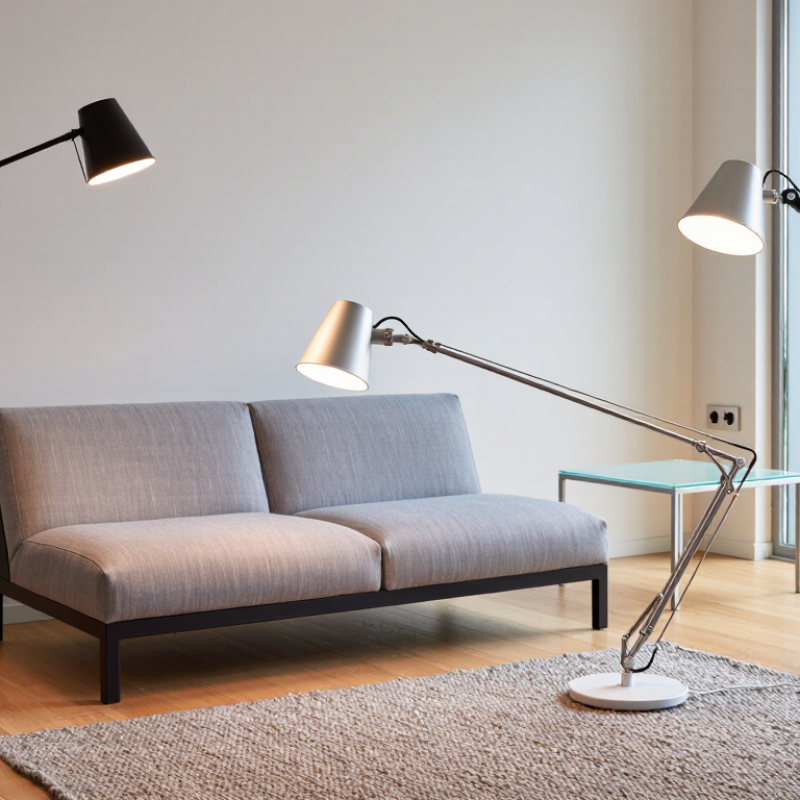
Cantilever floor lamps use an offset arm to project light beyond the standing base. Their curved or angled structure reaches over sofas, reading chairs, and dining tables. Unlike ordinary floor lamps, the shade does not sit directly above the base. A weighted foundation keeps the lamp balanced during daily use. Good designs combine a stable base, smooth arm movement, and a shade that controls glare. They can create focused lighting without requiring ceiling installation. The shape also saves table space.
Tips: Check the base weight first. Measure the arm reach and ceiling height. Test the switch with one hand. Inspect joints for wobbling, rough edges, or loose screws. Ask wholesale suppliers about metal thickness, packaging protection, socket standards, and replacement parts. A sample order reveals more than attractive catalog photos.
For wholesale buyers, material consistency matters across every production batch. Steel arms should remain straight after assembly. Marble or stone bases need careful edge protection. Fabric, glass, or metal shades can change the mood and brightness noticeably. Warm light often suits living rooms, while brighter neutral light supports reading areas. However, a longer arm is not always better. It may require a heavier base and stronger packaging. Buyers sometimes focus on appearance and overlook floor clearance. That mistake can cause furniture interference. A reliable supplier should provide assembly drawings, test records, and clear measurements. Still, specifications may not show how the lamp feels in a real room. Viewing a physical sample remains the safer decision.
Cantilever floor lamps extend light outward without occupying a central table surface. Their offset arm is useful beside sofas, reading chairs, and conference tables. A weighted steel or cast-iron base helps prevent tipping during daily adjustment. The arm should move smoothly, but it must also hold its position. I have found that loose joints become noticeable after repeated use. That detail is easy to miss during a short sample inspection.
For wholesale buyers, key specifications include arm reach, base diameter, shade size, and cable length. Common adjustable designs offer 180-degree rotation or several height positions. A fabric shade creates softer light, while aluminum shades direct stronger illumination downward. Dimmable LED modules support reading, hospitality, and lounge applications. Warm light near 2700K feels comfortable in living areas. Neutral light around 4000K works better for offices and display corners. Color rendering matters when the lamp illuminates wood, textiles, or artwork.
Reliable suppliers should provide load testing, electrical safety documents, and clear carton protection details. Inspect the hinge, switch, plug, and cable strain relief before approving large quantities. A sample may perform well, yet packaging can still allow scratches or bent arms. This is where I remain cautious. The best-looking prototype is not always the most durable production item. Ask for assembly instructions, spare hardware, and stable lead-time records. These practical details reduce installation delays for furniture stores, hotels, and project contractors.
Typical recommended illuminance ranges for common cantilever floor lamp applications. A cantilever arm helps position light over seating, desks, and display areas without placing the lamp base directly on the work surface.
Values are typical lighting-design targets measured in lux; exact requirements depend on room size, task detail, surface reflectance, and shade diffusion.
China Top Cantilever Floor Lamps Wholesale Suppliers: How to Evaluate Chinese Wholesale Lamp Suppliers
A reliable supplier should provide more than attractive photographs and a low quotation. The International Energy Agency reports that lighting uses about 15% of global electricity. Therefore, ask for LED efficacy, driver efficiency, heat management, and rated lifetime data. Request a working sample, not only a catalogue unit. Check whether the weighted base remains stable when the arm extends sideways. Inspect welds, cable routing, switch quality, and the finish under strong light. Small defects become expensive after thousands of units.
Supplier evaluation should combine documents with direct evidence. Ask for factory registration details, quality-control procedures, material specifications, and recent testing reports for your target market. Verify reports with the issuing laboratory when possible. Review production capacity, minimum order quantity, spare-part support, packaging tests, and actual lead times. The International Trade Centre’s trade data can help compare China’s export patterns under the relevant lighting product codes, but trade volume does not prove quality. Remember that limitation. A large exporter may still outsource critical components. I would not trust an audit based on one afternoon. Request batch photos, pre-shipment inspection, and random sample checks. The UNEP Global Status Report for Buildings and Construction also highlights the growing importance of energy efficiency, making transparent performance data commercially useful. Get every promise in writing.
| Evaluation Dimension | Practical Benchmark for Wholesale Buyers | Evidence to Request | Suggested Score | Buyer Assessment |
|---|---|---|---|---|
| Product Specification | Confirm overall height, arm reach, base diameter, shade dimensions, lamp-head rotation, and cable length before quotation. | Dimensioned drawing, product specification sheet, and approved pre-production sample. | 0–10 | |
| Load and Stability | A cantilever design should remain stable during normal operation and should not tip when the arm is placed at its maximum approved extension. | Internal stability test, base-weight specification, anti-slip pad details, and test video using the final construction. | 0–10 | |
| Electrical Safety | Electrical parts must match the destination market’s voltage, plug, frequency, insulation, grounding, and labeling requirements. | Applicable test reports, wiring diagram, plug details, rated voltage, rated wattage, and safety labels. | 0–10 | |
| Lighting Performance | Check color temperature options such as 2700–3000 K for warm light and approximately 4000 K for neutral light; verify lumen output and dimming behavior. | Photometric data, color-temperature specification, dimmer compatibility statement, and sample test results. | 0–10 | |
| Material and Finish | Assess steel or aluminum thickness, weld quality, surface preparation, coating uniformity, shade material, and scratch resistance. | Material declaration, finish samples, coating test information, and inspection photos from the finished batch. | 0–10 | |
| Minimum Order Quantity | For standard wholesale models, a practical initial range is often about 50–200 units; customized colors, tooling, or packaging may require a higher quantity. | Written MOQ by model, color, finish, packaging method, and customization level. | 0–8 | |
| Sample and Development | A sample should normally be available before mass production; custom samples commonly require a separate fee and additional production time. | Sample price, sample lead time, revision policy, and confirmation procedure for the approved sample. | 0–8 | |
| Production Lead Time | For standard products, a common planning range is approximately 30–60 days after sample approval and deposit; customized orders may take longer. | Production schedule, capacity statement, holiday shutdown calendar, and written late-delivery procedure. | 0–8 | |
| Quality Control | The supplier should use incoming-material inspection, in-process checks, final inspection, and electrical function testing before shipment. | Inspection checklist, defect classification, batch photographs, test records, and independent inspection acceptance policy. | 0–10 | |
| Packaging and Shipping | Packaging should protect the long arm, shade, base, and electrical parts from abrasion and impact; confirm carton dimensions and shipping weight. | Packaging specification, drop-test method, carton photos, pallet details, and dimensional-weight calculation. | 0–8 | |
| Commercial Terms | Compare unit price, tooling or mold fees, sample charges, payment milestones, shipping terms, taxes, and currency basis—not price alone. | Formal quotation with validity period, Incoterm, payment schedule, included accessories, and all additional charges. | 0–8 | |
| Warranty and After-Sales Service | A clearly written warranty should define coverage for electrical failure, finish defects, missing parts, replacement parts, and claim timing. | Warranty document, spare-parts policy, response-time commitment, and process for defective or damaged goods. | 0–8 | |
| Factory Capability | Prefer a supplier that can demonstrate control of metalwork, surface finishing, assembly, testing, and packaging, whether performed in-house or by approved partners. | Factory audit, production-line photos, equipment list, workforce information, and subcontractor disclosure. | 0–8 | |
| Total Evaluation Score | / 100 | |||
China Top Cantilever Floor Lamps Wholesale Suppliers
China’s leading cantilever floor lamp suppliers combine metal fabrication with practical lighting design. Their production often begins with steel or aluminum cutting, followed by bending, welding, grinding, and surface treatment. Experienced buyers should inspect joint strength, base stability, cable routing, and switch operation during sample approval. Small defects matter.
Quality control should continue beyond a visual inspection. Reliable factories use incoming-material checks, in-process measurements, electrical safety tests, and final function testing. Inspectors may verify lamp balance, arm movement, socket temperature, coating adhesion, and packaging resistance. Batch records improve traceability. However, a polished sample can hide inconsistent mass production. A pre-shipment inspection remains valuable, especially for large wholesale orders.
Customization can cover arm length, shade diameter, finish, color temperature, plug specifications, packaging, and logo-free retail labeling. Suppliers may also adjust the base shape for hospitality, residential, or commercial settings. Clear drawings and approved reference samples reduce misunderstandings. Ask for material specifications and test reports suitable for the destination market. Some requests sound simple but affect tooling, cost, lead time, or stability. Good communication is essential. Mistakes still happen. A dependable supplier acknowledges them, explains corrective action, and updates production documents before repeating the order.
China Top Cantilever Floor Lamps Wholesale Suppliers
Ordering cantilever floor lamps from China requires more than comparing catalogue prices. The International Energy Agency reports that lighting uses about 15% of global electricity. Therefore, buyers should request LED efficacy, driver efficiency, and rated lifetime data. Ask suppliers for a working sample. Check the arm’s balance, base weight, switch response, and cable length. A tall lamp that wobbles on carpet is not a bargain.
Pricing usually depends on steel thickness, aluminum content, finish, LED module, packaging, and order quantity. Request separate prices for the lamp, export carton, tooling, inspection, and freight. Use the UN Comtrade database under HS 9405.20 to compare China’s lighting export patterns and destination markets. This classification is useful, but it does not isolate cantilever models. That limitation matters. Freight terms should be written clearly, especially FOB, CIF, and DDP. Import duties and local compliance costs can change the final price sharply.
For export orders, confirm voltage, plug type, product labeling, and safety documents before production. Require carton drop testing and corner protection around the projecting arm. A pre-shipment inspection should verify 100% lighting operation, not only random appearance checks. Ten percent of units tested may miss a repeated wiring fault. I would also reserve time for replacement parts, because one missing screw can delay installation. Supplier audits, production photos, and payment milestones improve reliability, although none removes every risk.
It uses an offset arm to project light beyond its standing base. The shade reaches over sofas, chairs, or tables. The base stays on the floor.
They provide focused light without ceiling installation. They also save table space beside reading chairs and sofas. That can matter in smaller rooms.
Check base weight, arm reach, ceiling height, and floor clearance. Test the switch with one hand. Inspect joints for wobbling, rough edges, and loose screws.
Steel and aluminum are common for arms and frames. Marble, stone, or cast iron may support the base. Shades can use fabric, glass, or metal.
Fabric shades create softer, warmer-looking light. Aluminum shades direct stronger light downward. Glass shades can spread light more broadly. The room may feel different.
Warm light near 2700K often suits living rooms and lounges. Neutral light around 4000K supports reading, offices, and display corners. Color rendering affects wood and textiles.
Request assembly drawings, electrical safety documents, test records, and carton details. Inspect balance, arm movement, socket temperature, cable routing, and coating adhesion. Small defects matter.
Catalog images cannot show wobbling, glare, or furniture interference. A sample reveals actual movement and floor clearance. Still, one good sample may not represent every batch.
Suppliers may adjust arm length, shade diameter, finish, color temperature, plug specifications, and packaging. Clear drawings reduce misunderstandings. Simple changes can affect tooling, stability, cost, and lead time.
Ask about edge protection for stone bases and support around metal arms. Check carton resistance and internal padding. Bent arms and scratches are easy to overlook.
Cantilever Floor Lamps are practical, space-saving lighting solutions designed with an extended arm that projects light outward from a stable base. Their adjustable structure, modern appearance, and flexible illumination make them suitable for living rooms, bedrooms, offices, hotels, reading areas, and commercial interiors. When sourcing these products from China, buyers should evaluate suppliers based on manufacturing experience, product consistency, communication, production capacity, and ability to meet international quality expectations.
A reliable supplier should provide clear specifications, material details, samples, inspection procedures, and customization options such as finishes, dimensions, shades, switches, packaging, and electrical configurations. Buyers should also review minimum order quantities, pricing structures, lead times, payment terms, shipping arrangements, and export documentation before placing an order. Careful comparison of factory capabilities and quality-control systems can help importers achieve stable supply, competitive costs, and products tailored to specific market requirements.