New
Reading
Projects
Talk To A Specialist +1 717 737 7120
0%

Choosing Hotel Corridor Wall Sconces requires more than matching a decorative finish. These fixtures guide guests through quiet, transitional spaces. They also influence perceived safety, visual comfort, energy use, and brand identity. A brushed-brass sconce may look elegant in a showroom, yet feel harsh against dark carpet and glossy stone.

The U.S. Department of Energy’s 2023 Solid-State Lighting Research and Development Opportunities report highlights continuing gains in LED efficacy, controls, and color quality. This supports efficient corridor lighting, but efficiency alone is not enough. The Energy Information Administration’s Commercial Buildings Energy Consumption Survey identifies lighting as a significant commercial-building energy load. Hotel operators should therefore examine wattage, operating hours, dimming, occupancy sensors, and maintenance access together. Small choices become expensive when hundreds of fixtures operate every night.

Howard M. Brandston, a respected lighting designer and author, wrote, “Good lighting is not about seeing more; it is about seeing better.” That principle fits hotel corridors closely. The best Hotel Corridor Wall Sconces reveal door numbers, floor changes, artwork, and walking surfaces without creating glare in a guest’s eyes. Light should feel calm. It should not announce itself.

This guide considers mounting height, beam distribution, color temperature, color rendering, emergency-lighting coordination, cleaning, and replacement costs. It also questions a common assumption: brighter corridors are not automatically safer or more welcoming. Actual results depend on wall reflectance, ceiling height, carpet color, camera placement, and guest expectations. Even strong specifications can fail after installation. A sample mock-up, nighttime review, and honest feedback from housekeeping staff may expose problems that drawings conceal.
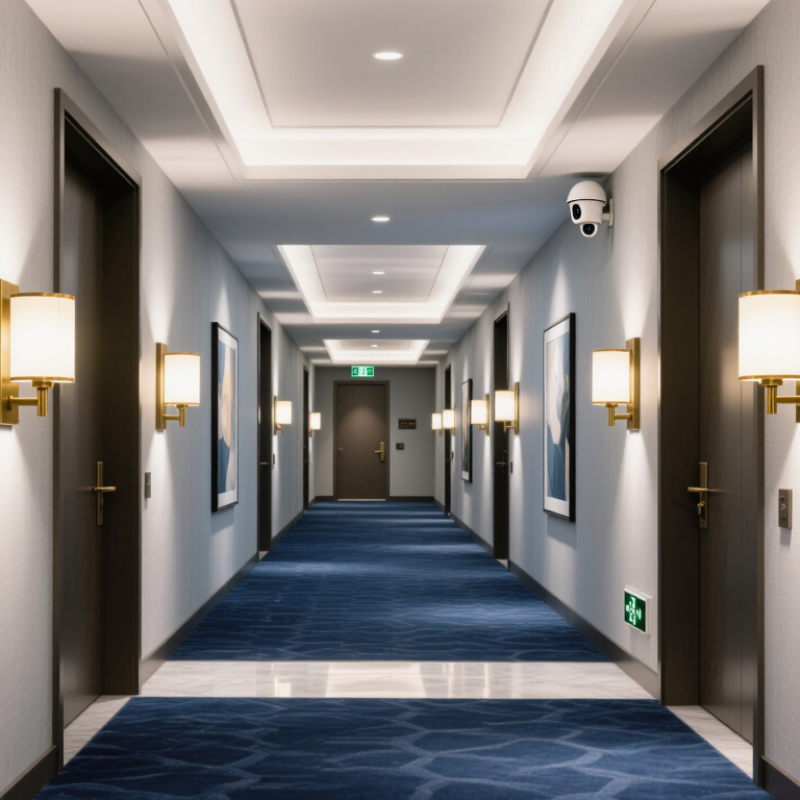
How to Choose Hotel Corridor Wall Sconces?

Define Corridor Lighting Goals: Target 5–10 fc (54–108 lux) for Safe Wayfinding

How to Choose Hotel Corridor Wall Sconces?

Start by defining the corridor’s lighting goal before selecting a decorative wall sconce. For safe wayfinding, target 5–10 foot-candles, or 54–108 lux, on the walking surface. Measure illumination at floor level, not only beside the fixture. A handheld lux meter can reveal dark patches near room doors, corners, and lift lobbies. In my experience, corridors with dark carpet or wood walls often need more output than bright, reflective interiors. Glare matters too. Guests should see the path clearly without facing exposed lamps at eye level.

Choose sconces with suitable beam distribution and spacing. A fixture that throws light upward may create a calm ceiling glow but leave the floor underlit. Check photometric data, mounting height, and actual corridor dimensions together. Keep fixtures aligned at a consistent height, unless artwork or architectural details require adjustment. Small differences can look surprisingly careless. Warm, comfortable color temperatures may suit hospitality spaces, but excessive warmth can reduce visual clarity. Confirm the result on site.

Tips: Test one sample fixture after dark. Walk from both directions. Check the floor, door numbers, and corners. Do not rely only on manufacturer calculations. Furniture, carpet changes, and painted surfaces can alter the final reading. Recheck after installation, because the first plan may need refinement.

Check ADA Clearances: Keep Sconces Within the 4-Inch Projection Limit

In hotel corridors, a decorative sconce must also function as a safe circulation element. Under the ADA Standards, an object mounted between 27 and 80 inches above the finished floor generally cannot project more than 4 inches into an accessible route. Measure the fixture’s deepest point, not only the backplate. That small detail can turn an approved drawing into a field correction.

Use a full-scale mock-up before ordering large quantities. Walk past it with luggage, a service cart, and a wheelchair. Check tight turns near elevators, door openings, and corridor corners. I have seen attractive fixtures create blind contact points because their shades extended farther than expected. The plan looked compliant. The installed wall did not.

The four-inch rule is only one design consideration. Confirm mounting height, door swings, handrails, fire equipment, and local accessibility requirements with the project architect or authority having jurisdiction. ADA requirements apply in the United States, while state and municipal rules may add restrictions. Select a compact profile with protected edges and secure mounting hardware. A narrow fixture may seem less dramatic, but it often leaves a clearer path. Recheck the measurement after installation, since uneven wall finishes or trim can add unexpected depth. Mistakes happen. A careful site review catches them early.

Select Hospitality CCT: Compare Warm 2700–3000K Light for Guest Comfort

When choosing hotel corridor wall sconces, I begin with the guest’s eye level, not the fixture catalog. A corridor should feel calm after a long journey. Warm 2700–3000K light usually supports that feeling. At 2700K, walls can look softer and more residential. At 3000K, artwork and floor textures often appear slightly clearer. The difference is small on paper. Guests still notice it.

For most sleeping-room corridors, I would test 2700K first, especially where wood, beige carpet, or muted stone dominates. A 3000K option may suit brighter interiors or corridors needing a cleaner visual rhythm. Avoid aiming light directly toward approaching guests. Shielded sconces reduce glare, while even spacing prevents alternating bright and dark patches. I also check color rendering, preferably a high CRI specification, so artwork and skin tones do not look dull. CCT alone cannot solve poor optics.

Request a full-scale sample and view it at night. Hold a key card near the wall. Walk from both directions. A dimming system can help staff adjust brightness for changing occupancy, though controls must remain simple and reliable. Warm light may feel too yellow against cool white finishes; this is an easy mistake to miss in a showroom. I once preferred 2700K on a sample board, then found 3000K more balanced beside blue-gray carpet. Recheck the palette before ordering.

Specify Light Quality: Use CRI 80+ LEDs and Control Glare in Guest Corridors

How to Choose Hotel Corridor Wall Sconces?

Guest corridors need more than attractive wall fixtures. Light quality affects comfort, wayfinding, artwork, and perceived cleanliness. Choose LEDs with a CRI of 80 or higher. This keeps carpet, wood, and skin tones looking natural. In practice, CRI 90 can be valuable near mirrors or decorative displays. However, higher CRI may affect energy use and fixture cost. Check the complete specification, not only the marketing headline.

Glare deserves equal attention. A bright LED chip can feel harsh in a quiet hallway, especially beside elevator doors. Select sconces with recessed sources, frosted diffusers, or carefully designed shields. Aim for soft, even distribution across the walking path. Avoid placing fixtures directly at eye level when guests approach from both directions. A lighting mock-up is useful. I once underestimated reflected glare from polished stone; the corridor looked elegant but felt uncomfortable.

Tips: Test one fixture at night, not only in a showroom. Walk beneath it from both directions. Check shadows near door numbers and artwork. Compare 2700K, 3000K, and 3500K samples in the actual corridor. Keep the result calm. Also review flicker performance, dimming compatibility, cleaning access, and emergency-lighting coordination. A technically strong fixture can still fail when its light pattern ignores the wall finish.

How to Choose Hotel Corridor Wall Sconces? - Specify Light Quality: Use CRI 80+ LEDs and Control Glare in Guest Corridors
Specification Recommended Target Why It Matters in Hotel Corridors What to Check Before Approval
Color Rendering Index (CRI) CRI 80 minimum
CRI 90 preferred for premium interiors
Accurate color rendering helps guests recognize carpet, artwork, wall finishes, room-number signs, and skin tones without a dull or distorted appearance. Request the LED photometric data sheet and confirm the reported general CRI value. For high-end corridors, also review R9 performance when artwork or warm-colored finishes are important.
Correlated Color Temperature (CCT) 2700–3000 K
Use one consistent CCT throughout the corridor
Warm-white light supports a welcoming hospitality atmosphere and coordinates well with wood, stone, textiles, and other common interior materials. Confirm the nominal CCT and the permitted tolerance. Avoid mixing visibly different color temperatures on the same floor or within the same sightline.
Glare Control Shielded or recessed LED source
Target low glare in normal viewing positions
Guests often view wall sconces from long corridor sightlines. Exposed high-luminance LEDs can create discomfort glare, reflections, and a less refined appearance. Inspect the fixture from eye level and from both ends of a mock-up corridor. Check for visible LED points, harsh hotspots, and bright reflections on glossy finishes.
Unified Glare Rating (UGR) Preferably UGR < 22 where calculation is applicable A lower glare value can improve visual comfort, especially in long, narrow corridors where luminaires are repeatedly visible in the field of view. Ask for a lighting calculation based on the actual corridor dimensions, mounting height, spacing, wall reflectance, and luminaire photometric file.
Light Output Typically 500–1200 lumens per sconce
Adjust to spacing and ceiling height
Appropriate output provides clear wayfinding and room-number visibility without excessive brightness or uneven pools of light. Do not select by lumens alone. Review maintained illuminance on the floor, walls, door faces, artwork, and signage after applying maintenance factors.
Corridor Illuminance Approximately 100–200 lux maintained on the floor
Follow the applicable local code
This range commonly supports comfortable pedestrian movement and wayfinding while helping to avoid an overly bright, institutional atmosphere. Verify the project brief, local requirements, and lighting simulation. Check average illuminance, minimum illuminance, and the resulting uniformity ratio.
Illuminance Uniformity Maintain a smooth distribution; avoid visibly dark gaps Uniform light reduces visual adaptation problems and makes the corridor feel safer, cleaner, and more intentionally designed. Review a point-by-point calculation and a physical mock-up. Pay particular attention to the areas between sconces, corners, door recesses, and elevator lobbies.
Beam Distribution Wide asymmetric or indirect distribution for walls
Choose symmetric distribution for general ambient lighting
The distribution should support the design goal: wall grazing for finishes and artwork, or broader ambient light for pedestrian circulation. Review the polar curve, beam spread, and wall-wash data. Confirm that the light pattern does not spill excessively into guest-room doors or create bright scalloping.
Flicker Performance Low flicker operation
Prefer a well-controlled LED driver
Visible flicker or stroboscopic effects can cause discomfort for some occupants and may become noticeable in security-camera footage or moving scenes. Request driver test information, including percent flicker and flicker index where available. Check performance at all dimming levels, not only at full output.
Dimming and Controls 0–10 V, DALI, phase dimming, or another project-compatible system Dimming allows the corridor lighting to respond to daylight, late-night operating conditions, cleaning schedules, and energy-management requirements. Confirm minimum dimming level, startup behavior, driver compatibility, control wiring, emergency-lighting interaction, and whether audible noise occurs during dimming.
Color Consistency Use a tight LED color-consistency specification
Prefer a small MacAdam step tolerance
Consistent color prevents neighboring sconces from appearing noticeably different, which is especially important in repetitive hotel corridors. Check the approved LED binning or color-tolerance information and require a sample installation before final procurement.
Light Source Lifetime Specify an L70 rating suitable for long operating hours
Often 50,000 hours or more
Long service life reduces relamping frequency, guest disruption, maintenance labor, and the risk of mismatched replacement lamps. Review the LED and driver lifetime conditions, ambient-temperature limits, lumen-maintenance data, and warranty terms. Confirm that the rating is not based only on optimistic laboratory conditions.
Ingress Protection Typically IP20 for dry indoor corridors
Use a higher rating where moisture or cleaning exposure is expected
The enclosure should match the corridor environment, cleaning process, nearby bathrooms, exterior doors, and any risk of water or cleaning-fluid exposure. Confirm the tested IP rating and installation orientation. Review whether the cleaning method could introduce moisture beyond the fixture’s intended protection level.
Surface Reflectance Coordinate light output with wall and floor finishes Light-colored walls reflect more light, while dark or textured finishes absorb it. The same sconce can therefore produce very different visual results in different corridors. Include actual or reasonably accurate reflectance assumptions in the lighting calculation. Test samples of paint, stone, wood, carpet, and metal finishes under the selected CCT.
Installation Height and Spacing Set height and spacing from the photometric design, not appearance alone Incorrect mounting height or excessive spacing can cause dark zones, glare at eye level, uneven wall washing, and poor visibility of room signs. Approve a full-size mock-up or representative section. Verify clearances from doors, handrails, artwork, fire equipment, and accessibility routes before fixing the layout.

Calculate Spacing and Energy: Coordinate Beam Spread, Ceiling Height, and Load

How to Choose Hotel Corridor Wall Sconces?

Corridor lighting should begin with spacing, not appearance. EN 12464-1:2021 commonly uses 100 lux for hotel circulation areas, with uniformity also affecting guest comfort. Confirm the required level with a qualified lighting designer and local rules. A narrow beam creates bright pools and dark gaps. A wider beam usually supports smoother coverage. For example, a 30-degree beam aimed across a 2.4-meter mounting distance covers roughly 1.3 meters. The actual result changes with wall color, ceiling height, and mounting angle. Mock up one corridor bay. Formulas can mislead.

Ceiling height changes the visual rhythm. Higher ceilings often need greater vertical spread or carefully aimed sconces. Keep the beam away from guests’ eyes, mirrors, and room doors. Calculate electrical load clearly: 24 fixtures at 8 watts create 192 watts of connected load. Operating them for 12 hours uses about 2.3 kWh daily, before controls and standby power. The U.S. Department of Energy reports that LED lighting can use at least 75% less energy than incandescent lighting. ASHRAE Standard 90.1-2022 also emphasizes lighting controls and power limits in commercial buildings. Use occupancy or scheduling controls where appropriate. Do not assume every sensor saves energy; poorly placed sensors create complaints. Test dimming, shadows, cleaning access, and emergency-light interaction before final installation.

FAQS

What color temperature suits hotel guest corridors?

Warm 2700–3000K light usually creates a calm, residential atmosphere. 2700K softens wood, beige carpet, and muted stone. 3000K gives artwork and floor textures clearer definition. The difference seems small. Guests may still notice.

When should a corridor use 2700K lighting?

Test 2700K in sleeping-room corridors with warm materials. It works well beside wood doors and beige carpeting. However, it may look too yellow beside blue-gray carpet or cool white walls.

When is 3000K a better option?

Choose 3000K when the corridor needs a cleaner visual rhythm. It can balance brighter interiors and cooler finishes. Always compare samples beside the actual floor and wall materials.

How can wall sconces reduce glare?

Select recessed light sources, frosted diffusers, or protective shields. Avoid directing light toward approaching guests. Check the fixture beside elevator doors, polished stone, and mirrors. Reflected glare can surprise you.

What CRI level should corridor lighting provide?

Use LEDs with a CRI of 80 or higher. CRI 90 can improve artwork, mirrors, skin tones, and decorative displays. Higher CRI may increase energy use and fixture cost. Check the full specification carefully.

How should lighting samples be tested?

Request a full-scale sample and test it inside the corridor at night. Walk beneath it from both directions. Hold a key card near the wall. Check door numbers, artwork, shadows, and floor texture.

How should sconces be spaced along a corridor?

Space fixtures evenly to prevent alternating bright and dark patches. Keep illumination soft across the walking path. Avoid placing fixtures directly at approaching eye level. The wall finish can change the result.

Which technical details deserve review besides color temperature?

Review flicker performance, dimming compatibility, cleaning access, and emergency-lighting coordination. Simple controls help staff adjust brightness during changing occupancy. A beautiful fixture can still fail. I would retest the palette before ordering.

Conclusion

Choosing the right Hotel Corridor Wall Sconces requires balancing safety, comfort, accessibility, and energy performance. Begin by defining the lighting goal: corridors should generally provide about 5–10 foot-candles, or 54–108 lux, to support clear and safe wayfinding. Check installation locations carefully so each sconce stays within the four-inch projection limit, helping maintain required clearance for guests and mobility devices. For a welcoming hospitality atmosphere, warm light between 2700K and 3000K is usually appropriate, creating a comfortable environment without appearing overly dim.

Light quality is equally important. Select LED sources with a CRI of at least 80 so wall finishes, artwork, and interior details appear natural. Use diffusers, shields, or carefully directed beams to reduce glare, especially near elevators and guest room entrances. Finally, coordinate fixture spacing with beam spread, ceiling height, and corridor dimensions to avoid dark gaps or excessive brightness. Reviewing wattage, controls, and operating schedules can further improve energy efficiency while maintaining consistent illumination throughout the property.


Clara

Clara

Clara is a dedicated marketing professional with a strong understanding of customer needs, market trends, and the practical value of innovative business solutions. As a key member of our team, she combines strategic thinking, clear communication, and in-depth product knowledge to create content......