In 2026, choosing a floor lamp means balancing useful light, safe construction, and a footprint that suits your room. Tripod Floor Lamps bring a distinctive, camera-inspired shape, but their three legs need enough clear floor space. Measure the corner before you buy. Check whether the shade directs light toward a reading chair or spreads it across the room. These details matter more than a staged product photo suggests.
Bulb efficiency deserves attention, too. The U.S. Department of Energy’s Energy Saver guidance says LEDs use at least 75% less energy than incandescent lighting and can last up to 25 times longer. Those figures compare LEDs with incandescent bulbs, so they should not be treated as a direct comparison with every modern bulb. Still, they offer a practical reason to check bulb compatibility, brightness, and dimming options before choosing a lamp. A dimmer is useful. Only if the bulb and lamp support it.
Look closely at the tripod’s joints, leg material, and base stability, especially if people or pets pass nearby. Consider whether the shade is easy to clean and whether the switch sits within comfortable reach. A lower price can be tempting, but unclear assembly instructions or a wobbly frame may cost you convenience later. No single style fits every home. This guide compares the features that affect daily use, helping you choose a lamp that looks right and works reliably.
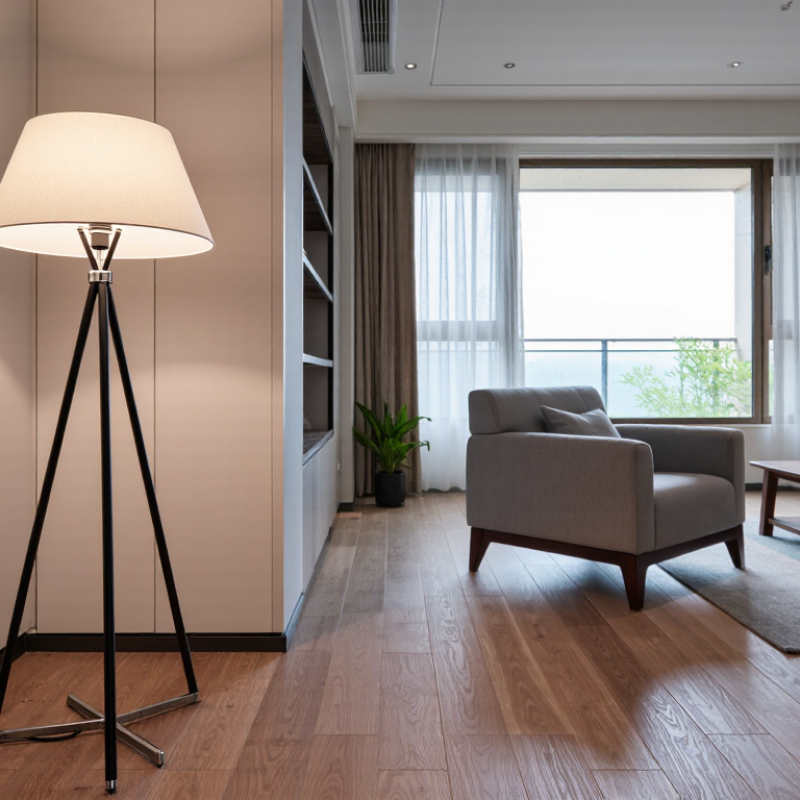
A tripod floor lamp is defined by its three-legged support, usually joined beneath a central stem. The legs spread across the floor to hold the lamp upright, while the stem carries the socket and shade. Wood, metal, or a combination of materials may form the frame. The three-point layout gives the lamp a distinct profile and a stable base on an even surface. It still needs room around its feet.
Inside the stem, an insulated wire carries electricity from the plug to the bulb socket. A switch interrupts the current so you can turn the light on or off. Depending on the design, the switch may sit on the cord or near the socket. The shade directs or softens the light; an open fabric shade can create a warm pool, while a more opaque one may send more light downward. Check that the bulb type and wattage match the lamp’s specifications.
In daily use, position the legs before plugging in, and keep the cord clear of walkways. A rug edge or uneven floor can make even a well-built tripod wobble. That detail is easy to overlook. Tighten any adjustable joints as needed, but avoid forcing them. The structure looks simple, yet its balance depends on the leg spacing, the floor, and the weight of the shade.
A tripod floor lamp should fit the room’s scale, not merely fill an empty corner. Measure from floor to ceiling, then check that the shade sits below eye level when you are seated. In a compact room, a slim base and narrow shade preserve walkway space; beside a broad sofa, a taller lamp with a wider shade looks more balanced. Leave enough clearance around the legs. A tripod can spread farther than it appears in a product photo.
Use the furniture as your measuring guide. A lamp beside a reading chair should direct light toward the page, while a lamp behind a sofa can soften the wall and reduce harsh contrast. The Illuminating Engineering Society’s lighting guidance emphasizes matching light to the task; one bright bulb cannot serve every purpose well. Consider a dimmable LED and a shade that diffuses the bulb. The U.S. Department of Energy’s 2020 U.S. Lighting Market Characterization reported that LEDs made up about 30% of installed lighting in 2018, making bulb compatibility worth checking.
Style matters, but so does restraint. A Houzz 2024 U.S. Houzz & Home Study reported a $24,000 median renovation spend for 2023; even modest room updates benefit from choices that work beyond one trend. Match the lamp’s finish to a detail already present, such as a picture frame or chair leg. Not every contrast works. I’d still test the lamp in the room before committing.
How to Choose the Best Tripod Floor Lamps in 2026
How to Assess Stability, Materials, and Build Quality
Check a tripod lamp on a hard, level floor before judging its stability. Spread the legs fully and look for a wide, even stance. Press the frame gently near the center column; it should not rock or twist. Narrow legs can look elegant, yet they may feel less secure beside busy walkways. Metal parts should have smooth joints and a consistent finish. Wood should feel solid, with no cracks or loose fittings. Material alone does not guarantee quality.
Tips: Tighten each connection by hand, then check again after moving the lamp. Inspect the feet for grippy pads that protect floors. If possible, test the lamp with its shade attached, since the shade can shift the balance.
Look closely at how the legs connect to the central pole. Wobbly hinges or thin fasteners may loosen with regular use. Check that the cord exits without sharp bends and stays clear of the feet. A stable lamp should remain upright during a light, careful nudge, but avoid forceful testing. Floors are not always even, and that can make a sound frame seem unstable. There is no perfect quick test; a little patience during setup matters.
Suggested evaluation weights for assessing stability, materials, and build quality.
Prioritize a secure, well-balanced base and durable leg materials. Check joints, fasteners, and overall fit for wobble or looseness, then consider shade compatibility and ease of assembly. These percentages are suggested decision weights, not laboratory test results or ratings of specific products.
A tripod floor lamp can look bright in a showroom and feel weak beside a reading chair. Compare lumens, not watts: lumens indicate visible light, while watts describe energy use. For reading, look for enough output to illuminate a page without making the shade glare. A darker shade can soften light, but it may also reduce how much reaches the room. Check the lamp’s recommended bulb size and maximum wattage before buying.
Bulb type affects both comfort and flexibility. LED bulbs use less energy than traditional incandescent bulbs and are available in warm or cooler color temperatures. Warm light often suits a living room; a cooler tone can make small print easier to see. Dimming matters, too. A bulb marked dimmable may still flicker with an incompatible lamp control, so check that both support the same dimming method. I would not assume compatibility from a label alone.
Controls shape everyday use. A foot switch is convenient when the lamp sits beside a sofa, while an inline switch can be awkward behind furniture. Touch controls are quick, but accidental taps can change settings. Try reaching the switch from your usual seat. Small detail, real difference. Also inspect cord length and placement; a well-lit corner is less useful if the cable forces the lamp into an unstable spot.
How to Choose the Best Tripod Floor Lamps in 2026
For safety, check that all three legs lock firmly and sit flat on your floor. A narrow footprint may wobble on thick carpet or when brushed near a sofa. Inspect the cord for damage and keep it clear of walkways and hot bulbs. Look for a recognized safety certification, and check that the lamp is intended for your bulb’s wattage. UL 153 is the safety standard for portable electric luminaires. A lamp can seem steady on carpet yet rock on bare boards. Small details matter.
Energy use shapes long-term value. The U.S. Department of Energy reports that LEDs use up to 90% less energy than incandescent bulbs. Its guidance also notes that LEDs can last up to 25 times longer. Check whether the lamp includes an LED bulb, accepts replacements easily, and supports dimming if you need it. A low purchase price can still mean higher running costs or awkward bulb replacements. To estimate electricity cost, multiply watts by daily hours, divide by 1,000, then multiply by your local rate. It is only an estimate.
Tips: Before buying, measure the lamp’s footprint beside your chair and note the bulb wattage on its label. Compare the estimated yearly cost, warranty, and replacement-bulb price—not just the shelf price. If the legs feel loose during setup, pause and recheck the joints.
Measure the ceiling height and check where the shade sits beside seated eye level. A slim base suits a compact room, while a wider shade can balance a broad sofa.
Check the full spread of all three legs, not just the center pole. Keep them clear of walkways and nearby furniture.
Aim its light toward the page, and choose a shade that softens the bulb’s glare. One bright bulb may not suit every task.
Pick up a finish already in the room, such as a picture frame or chair leg. Too much contrast can feel awkward. I’d test it in place.
Make sure all three legs lock firmly and sit flat on the floor. Thick carpet may hide a wobble until someone brushes past.
Inspect the cord for damage, keep it away from walkways and hot bulbs, and confirm the lamp suits your bulb’s wattage. Look for a recognized safety certification.
LEDs use less energy and can last longer than incandescent bulbs. Check whether the lamp accepts replacement bulbs and supports dimming if you need it.
Multiply its watts by daily hours, divide by 1,000, then multiply by your local electricity rate. It’s only an estimate.
Check the warranty, replacement-bulb price, and estimated yearly energy cost. A cheap lamp can become inconvenient if its bulbs are hard to replace.
Choosing the best Tripod Floor Lamps in 2026 starts with understanding their three-legged design, which supports a central pole and shade while adding a distinctive look to a room. Consider the lamp’s height, footprint, and overall style in relation to your furniture and available space. A well-proportioned lamp should complement the room without blocking walkways or overwhelming nearby decor.
Look beyond appearance when comparing options. Check the legs, joints, and materials for sturdy construction, and assess whether the base feels stable on your flooring. Compare light output, compatible bulb types, and controls to find an option that suits reading, relaxing, or general illumination. Finally, review practical safety features, energy use, and expected durability alongside the price. Balancing these factors can help you choose a dependable lamp that fits both your home and your budget.