Choosing the right Hospitality Table Lamps can transform a guest room, lobby, or restaurant corner. Light affects comfort, mood, and how carefully guests notice a space. A lamp may look elegant in a showroom, yet feel harsh beside a bed. That difference matters.
This guide examines the decisions hospitality professionals face every day. It considers brightness, color temperature, shade design, stability, materials, cleaning needs, and energy use. A warm 2700K to 3000K glow often supports relaxation, while focused task lighting helps guests read menus or work. However, brightness alone does not create comfort. Glare, switch placement, and exposed bulbs can quietly damage the experience.
Practical testing remains essential. Place a sample lamp beside a real bed, chair, or reception desk. Check its light from a seated guest’s eye level. Touch the base after several hours. Inspect the cord, finish, and shade for cleaning problems. These small observations reveal weaknesses that product images hide. No checklist is perfect. Personal taste, regional design expectations, and property budgets still influence the final choice. A beautiful lamp can become impractical when staff must polish delicate surfaces daily. Likewise, a durable fixture may appear too plain for an upscale suite.
The following outline offers a balanced method for comparing Hospitality Table Lamps. It connects visual appeal with safety-conscious design, reliable performance, and long-term maintenance. The goal is not to choose the most expensive model. It is to choose lighting that guests barely notice, because it simply works.
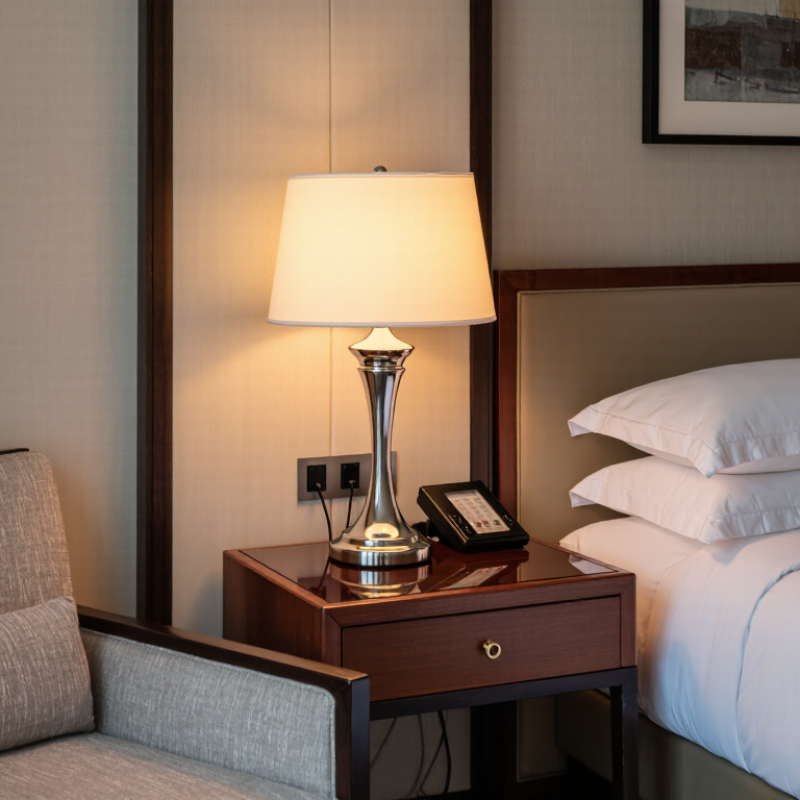
Define the Role of Table Lamps in Hospitality Spaces
Hospitality table lamps do more than decorate a room. They shape how guests read menus, find personal items, and experience evening service. In a hotel lounge, a warm lamp can soften a large room with hard surfaces. In a guest room, it can create a quiet reading zone beside the bed. Its role is practical and emotional.
A useful lamp should support the guest journey without demanding attention. The light must reach the table surface, while its shade protects the eyes from glare. Stable bases matter in busy restaurants, where trays and bags may pass close by. Materials should also suit frequent cleaning and daily handling. I once selected a beautiful lamp with a narrow base. It looked refined, but it felt unsafe near a crowded reception desk. The mistake was small, yet noticeable.
Tips: Observe the space at night. Test the lamp from a seated position. Check shadows on menus and faces. Choose adjustable brightness when guests may work or relax. Keep cords controlled and away from walking paths. Measure the table before ordering. A lamp that is too tall can block conversation, while one that is too short may leave the surface dim. Do not judge warmth by appearance alone. Verify the actual light output. Perfect choices are rare. Review the result after real guest use.
Assess Room Style, Guest Experience, and Functional Lighting Needs
How to Choose the Best Hospitality Table Lamps?
A table lamp should match the room’s visual language. Choose ceramic or linen finishes for relaxed interiors. Use metal, glass, or stone for sharper contemporary rooms. Scale matters. A small lamp disappears beside a large headboard. An oversized shade can block views and feel intrusive.
Guest experience depends on more than appearance. Guests often read, work, charge devices, or search through luggage beside the bed. The lamp should provide focused light without exposing a harsh bulb. A warm color temperature, usually between 2700K and 3000K, supports a calmer evening atmosphere. Adjustable brightness adds control.
The U.S. Department of Energy reports that LED lighting uses at least 75% less energy and lasts up to 25 times longer than incandescent lighting. That supports lower maintenance demands, but efficiency alone does not guarantee comfort.
I have seen attractive lamps create deep shadows across bedside surfaces. The design looked right. The lighting failed.
Tips:
Test the lamp from the guest’s eye level. Check the switch with one hand. Measure reading light at the pillow, not only on the tabletop. Leave enough clearance for phones and personal items. Use shielded shades to reduce glare. Consider replaceable LED components, though this choice can complicate future repairs. The 2024 North American hotel guest-satisfaction research also emphasizes room quality as a major part of the stay, making small lighting decisions surprisingly important.
Choose the Right Lamp Size, Materials, and Shade Design
How to Choose the Best Hospitality Table Lamps?
Choose the Right Lamp Size, Materials, and Shade Design
A hospitality table lamp should fit the furniture, not merely fill an empty corner. Measure the table before choosing its height and base diameter. A lamp around 60 to 70 percent of the table’s width often feels balanced. Keep the shade below eye level when guests are seated. This reduces glare across dining tables, desks, and bedside surfaces. I once selected a beautiful lamp that looked oversized beside a narrow nightstand. It worked in the showroom, but not in the room.
Material affects both appearance and daily maintenance. Powder-coated metal handles frequent cleaning well, while ceramic adds warmth but may chip more easily. Wood can soften a modern interior, yet porous finishes need careful protection from moisture. Look closely at the base. It should feel stable, especially near luggage, menus, or service trays. Avoid choosing materials from photographs alone. Texture and weight can be surprisingly different in person.
Tips: Match the shade shape to the room’s lines. Cylindrical shades suit contemporary spaces, while tapered shades create a softer look. Use warm, diffused light for guest comfort. Test the lamp beside actual upholstery and wall colors. The result may be less dramatic than expected, but often more comfortable. Check cable placement, switch access, and cleaning time before installation. Small practical details matter.
Compare Light Quality, Energy Efficiency, and Ease of Maintenance
Choosing hospitality table lamps requires more than matching a room’s color palette. In guest rooms, restaurants, and reception areas, light quality affects comfort, reading, and perceived cleanliness. Look for a high color rendering index, ideally 90 or above, so fabrics and food appear natural. A warm color temperature near 2700–3000K usually feels welcoming. Avoid visible flicker. It can cause eye strain, even when guests do not complain. Test the lamp beside a menu and a polished tabletop. Brightness should feel calm, not theatrical.
Tips: Compare three lamps in the actual space, not only in a showroom. Check shadows beneath the shade and glare from the bulb. Record power use across a full operating year. Efficient LED lighting can reduce heat and replacement work, but poor dimming can be frustrating. Request verified energy data and a clear warranty. Specifications help. They are not the whole experience.
Ease of maintenance protects both appearance and operating costs. Choose wipeable shades, accessible bulbs, stable cords, and finishes that resist fingerprints. A weekly inspection can reveal loose sockets, damaged cables, or uneven brightness before guests notice. Clean surfaces with a soft, slightly damp cloth and avoid abrasive products. Many LED lamps last for years, but heat, dust, and constant use can shorten that promise. I have sometimes chosen the most attractive lamp too quickly. Later, difficult cleaning made it a poor operational choice. Reliable design should survive real hotel routines, not just a showroom test.
How to Choose the Best Hospitality Table Lamps?
Comparison of representative lamp technologies using light quality, energy efficiency, and maintenance-related service life. Values are typical industry ranges and contain no brand-specific data.
How to read the chart: Light quality is represented by color rendering index (CRI), energy efficiency by luminous efficacy, and ease of maintenance by rated service life. Higher values indicate stronger performance. Integrated LED typically offers the best efficiency and longest service life, while halogen provides excellent color rendering but requires more frequent replacement.
Check Safety Standards, Durability, Budget, and Placement Requirements
How to Choose the Best Hospitality Table Lamps?
Safety should guide every hospitality lamp decision. Check recognized electrical safety certification for your region. Requirements can differ between countries and property types. Ask a qualified electrician to verify wiring, plugs, and grounding. Look for stable bases, protected bulbs, heat-resistant materials, and covered switches. In damp areas, confirm the lamp has suitable moisture protection. A beautiful lamp becomes a liability when its cord crosses a walking path. Test the lamp after several hours. Excessive heat is a warning sign.
Durability also matters because hotel lamps face constant handling, cleaning, and occasional accidents. Choose solid construction, replaceable shades, and accessible spare parts. A heavier base can prevent knocks on narrow bedside tables. However, heavy does not always mean better. Some dense materials can damage delicate furniture. Review the finish under bright light. Scratches and fingerprints may appear sooner than expected. This is where a small sample room can reveal problems that product photos hide.
Budget planning should include energy use, maintenance, and replacement labor. A cheaper lamp may cost more after repeated repairs. Placement affects comfort as much as appearance. Bedside lamps should provide focused reading light without shining into a guest’s eyes. Lobby lamps need wider illumination and enough clearance from luggage traffic. Keep controls easy to reach, especially for older guests. Measure the table, shade height, outlet distance, and cleaning space before ordering. I would not finalize a selection from a catalog alone. Real rooms expose glare, shadows, and awkward cables.
FAQS
They support reading, navigation, and evening comfort. A warm lamp can soften hard surfaces in a lounge. It also creates a quiet reading area beside a bed. The best lamp helps quietly.
Measure the table, shade height, outlet distance, and cleaning space. A tall lamp may block conversation across a small table. A short lamp may leave menus in shadow. Test it from a seated position. Small differences matter.
Choose light with a color rendering index near 90 or above. Food, fabrics, and skin should look natural. Warm light around 2700–3000K often feels welcoming. Avoid visible flicker because it may cause eye strain. Check brightness beside a menu.
Use a shade that protects guests’ eyes from direct bulb glare. Test the lamp beside a polished tabletop. Look for dark areas under the shade. Check faces from normal seating positions. A showroom test is not enough.
Look for recognized electrical safety certification for your region. Check stable bases, protected bulbs, covered switches, and heat-resistant materials. Keep cords away from walking paths. Ask a qualified electrician to verify wiring and grounding. Test the lamp after several hours. Excessive heat is a warning.
Select solid construction, replaceable shades, and accessible spare parts. Finishes should resist fingerprints and repeated cleaning. A heavy base can prevent knocks on narrow bedside tables. However, excessive weight may damage delicate furniture. The sample room reveals more.
Choose wipeable shades, accessible bulbs, and controlled cords. Inspect lamps weekly for loose sockets, damaged cables, and uneven brightness. Use a soft, slightly damp cloth for cleaning. Avoid abrasive products. Dust and heat can shorten LED service life. Good looks can mislead.
Include purchase cost, energy use, maintenance, replacement parts, and labor. A cheaper lamp may require repeated repairs. Record power use across a full operating year. Request verified energy information and a clear warranty. Specifications help. They do not show every problem.
Conclusion
Choosing the right Hospitality Table Lamps begins with understanding their role in the guest experience. They should provide comfortable, practical illumination while complementing the atmosphere of bedrooms, lounges, reception areas, and dining spaces. Consider the room’s style, color palette, furniture scale, and intended mood before selecting a design. Lamp size should be balanced with tables and surrounding furnishings, while durable materials and suitable shade shapes can improve both appearance and light distribution.
Light quality is equally important, so choose lamps that offer pleasant brightness, suitable color temperature, and efficient energy use. Easy-to-clean surfaces, accessible replacement parts, and simple maintenance can reduce long-term operating costs. Before installation, review safety requirements, construction quality, budget limits, cable management, and placement restrictions. A well-planned choice will enhance usability, support guest comfort, withstand frequent operation, and contribute to a consistent, welcoming hospitality environment.