Choosing Hospitality Task Floor Lamps in 2026 requires more than matching a lobby’s colors. The lamp must support reading, writing, dining, and quiet work without creating glare. Guests notice small failures, such as a loose switch, exposed cable, or weak pool of light beside a chair. Hospitality teams should evaluate brightness, color rendering, dimming range, stability, cleanability, and replacement access as one system. The room tells the truth.
ENERGY STAR reports that certified LED lighting uses at least 75% less energy and lasts up to 25 times longer than incandescent lighting. That matters in hotels, where lamps may operate for many hours each day. However, efficiency alone does not guarantee comfort. A 2700K–3000K color temperature can feel welcoming, while a high-CRI source can reveal printed menus and skin tones more naturally. The Illuminating Engineering Society recommends controlling glare and designing light around the task, not merely increasing output. That principle is easy to forget.
Guest expectations also deserve attention. Deloitte’s 2025 Travel Industry Outlook identifies technology, personalization, and operational efficiency as continuing hospitality priorities. J.D. Power’s 2025 North America Hotel Guest Satisfaction Index keeps room quality and hotel facilities central to the guest experience. Therefore, buyers should test Hospitality Task Floor Lamps in a furnished mock-up, beside an actual lounge chair or desk. Check the reading angle, cord path, shade temperature, and cleaning routine. No lamp is perfect. A beautiful model may wobble. A durable model may look cold. The strongest choice balances measurable performance with lived experience, while documenting safety and accessibility requirements for the property’s location.
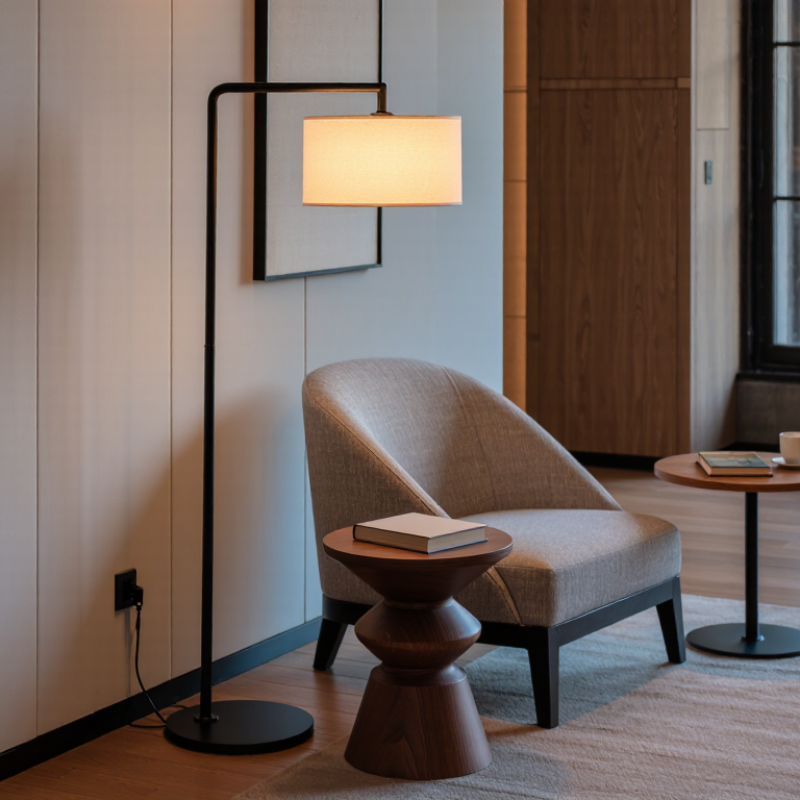
Hospitality spaces need lighting that supports real activities, not decoration alone. A guest may read beside a sofa, complete paperwork, or inspect a menu. Each task requires a different beam direction and brightness level. Measure the seating height, table position, and walking route before selecting a lamp. A flexible head can direct light toward a book without shining into a guest’s eyes.
Target about 300 to 500 lux for reading and desk work, then confirm the result on site. Warm light around 2700K to 3000K usually feels comfortable in bedrooms and lounges. A high color-rendering index helps fabrics, skin tones, and printed materials appear natural. Avoid glossy shades that create harsh reflections on glass tables. Too much brightness feels clinical. Too little causes eye strain.
Maintenance matters as much as appearance. Choose stable bases, protected cables, replaceable components, and controls that staff can understand quickly. Check whether the lamp remains steady when a guest adjusts its arm. Field inspections often reveal problems that product images hide. A beautiful lamp may still block a drawer or cast a shadow across a writing surface. Review cleaning access, heat around the shade, and compatibility with the room’s electrical system. A qualified professional should verify installation and local safety requirements.
How to Choose Hospitality Task Floor Lamps in 2026?
Lamp type affects both usability and atmosphere. A reading floor lamp gives focused light beside an armchair, while an uplighter creates softer ambient illumination. A pharmacy-style adjustable lamp offers stronger task control, but its exposed mechanism may feel too clinical. The U.S. Department of Energy reports that LED lighting can use up to 75% less energy and last 25 times longer than incandescent lighting. That matters in guest rooms with long operating hours. Not always, though.
Light Quality Light quality deserves closer attention than brightness alone. For reading, many designers target approximately 300–500 lux at the task surface, aligned with common IES recommendations for detailed indoor activities. Choose a high-colour-rendering LED, preferably CRI 90 or higher, so textiles and skin tones appear natural. IES TM-30 is more informative than CRI because it reports colour fidelity and gamut separately. Check flicker performance, too. A lamp can look calm while causing visual fatigue during prolonged reading.
Adjustability Adjustability turns a decorative lamp into useful hospitality equipment. Look for a stable base, a swivelling head, a smooth arm, and controls reachable from the seated position. Dimming from bright task light to low evening light is valuable. Adjustable colour temperature may help, but complicated controls can frustrate guests. The International Energy Agency estimates lighting represents about 15% of global electricity use, so efficient LEDs support operating goals. I still prefer physical controls over hidden touch panels. They feel less futuristic, but guests understand them faster.
Choosing Hospitality Task Floor Lamps in 2026
Hospitality task floor lamps must survive daily repositioning, cleaning, and accidental contact. Look for stable bases, protected wiring, heat-resistant housings, and tested switches. IEC 60598-1 covers essential safety requirements for luminaires, including electrical protection and construction. A lamp should also provide enough task light without creating glare on desks or bedside tables.
Safety comes first.
Energy efficiency affects every occupied room. The U.S. Department of Energy reports that LED lighting uses at least 75% less energy than incandescent lighting and can last up to 25 times longer. Select replaceable LED modules or standard LED bulbs with clear lumen ratings. Dimming controls can reduce unnecessary output, but cheap dimmers may flicker or fail early. That detail is easy to miss.
Durability requires more than a metal finish. Check hinge cycles, cord strain relief, switch ratings, and base stability during procurement tests. A practical trial should include repeated adjustment, simulated housekeeping movement, and several hours of continuous operation. The test may feel excessive, yet one loose joint can create complaints or a safety incident. ENERGY STAR guidance also supports choosing efficient lighting with verified performance, rather than trusting packaging claims alone. For maintenance, keep spare bulbs, shades, screws, and compatible switches on site. Record installation dates and inspect cords during room turnover. Staff may skip inspections when schedules tighten. That is the weak point.
Match the lamp design with the guestroom style and available space. A slim, matte-black floor lamp suits modern rooms with clean lines and dark hardware. In a warm, traditional guestroom, brushed brass, linen shades, or wood details can feel more natural. The lamp should support the room, not compete with artwork or furniture. Measure beside the bed, lounge chair, and desk before selecting a height. A reading lamp usually works best when its light source sits near shoulder level.
Space changes everything. In compact guestrooms, choose a narrow base that fits beside a chair without blocking movement. Adjustable heads help guests direct light toward a book, laptop, or travel bag. Diffused shades reduce glare on glossy tables and television screens. From practical room planning experience, small details matter. A beautiful lamp can still feel awkward if its switch is difficult to reach.
Tips: Check the base diameter, cable route, and walking clearance. Test the lamp beside actual furniture, not an empty display wall. Use warm, comfortable light for bedside areas and brighter task lighting near desks. Avoid oversized shades in tight corners.
I once underestimated cable visibility in a sample room; the lamp looked refined, but the exposed cord weakened the entire design. That mistake deserves attention.
Set a budget before choosing hospitality task floor lamps. Start with the budget. Include purchase price, delivery, installation, replacement parts, and staff time. A practical allowance should cover the lamp, shade, LED module, controls, and a small contingency. Low cost can become expensive when loose switches, fragile shades, or difficult cleaning increase maintenance calls.
Energy performance also affects the budget. ENERGY STAR reports that certified LED lighting uses at least 75% less energy and lasts up to 25 times longer than incandescent lighting. For a hotel desk, reading chair, or bedside table, select a warm 2,700–3,000K light with high color rendering. The Illuminating Engineering Society recommends careful control of glare, because guests need comfort rather than harsh brightness. Check the lamp at seated eye level. Light the task.
A sensible selection process compares total cost over five years, not only the invoice. Record wattage, expected life, warranty coverage, replacement availability, and cleaning requirements. A dimmer can improve comfort, but cheap controls may fail under frequent use. That detail is easy to overlook. The U.S. Department of Energy also identifies connected lighting controls as a way to improve operational efficiency when properly commissioned. However, not every property needs complex controls. In smaller rooms, a reliable switch and stable base may deliver better value. Recheck the decision after a trial installation. Guest feedback may challenge your assumptions.
A reading floor lamp provides focused light beside an armchair or bed. Its light source should sit near shoulder level.
An uplighter creates soft ambient illumination, but it may not provide enough task light. Pair it with a focused reading lamp when needed.
LEDs can use up to 75% less energy and last much longer than incandescent lamps. Long operating hours make that difference meaningful.
Aim for approximately 300–500 lux at the reading surface. Brightness alone is not enough; glare and visual comfort also matter.
Choose LEDs with a CRI of 90 or higher. Textiles, skin tones, and room finishes should look natural.
Yes. A lamp may appear calm while still causing fatigue during prolonged reading. Flicker details are easy to overlook.
Look for a stable base, swivelling head, smooth arm, and reachable controls. Dimming is especially useful from bright reading light to evening light.
Not always. Physical switches feel less futuristic, but guests usually understand them faster from a seated position.
Choose slim matte-black finishes for modern rooms. Brushed brass, linen shades, and wood details suit warmer interiors.
Check base diameter, lamp height, cable route, and walking clearance. Test it beside real furniture, not an empty display wall.
Choosing the right Hospitality Task Floor Lamps in 2026 begins with understanding the specific needs of each space. Consider whether the lamp will support reading, desk work, lounge activities, or bedside use, then assess brightness, color temperature, glare control, and adjustability. Different lamp styles may suit different layouts, so evaluate height, reach, stability, and ease of repositioning. Lighting should provide comfortable visibility without disturbing guests or creating harsh reflections.
Safety, durability, energy efficiency, and maintenance are equally important in hospitality environments. Select lamps made for frequent use, with reliable switches, secure bases, easy-to-clean surfaces, and replaceable or long-lasting light sources. The design should complement the guestroom’s décor while fitting comfortably within the available floor space. Finally, establish a realistic budget that includes purchase, installation, energy consumption, and upkeep. Comparing these factors together will help hospitality operators choose floor lamps that deliver practical performance, visual appeal, guest comfort, and dependable long-term value.