New
Reading
Projects
Talk To A Specialist +1 717 737 7120
0%

Choosing the right Hospitality Desk Lamps can quietly transform a guest room, reception counter, or executive office. A focused pool of warm light helps guests read, work, and feel comfortable without harsh ceiling glare. The wrong lamp can create reflections on glossy desks, dark corners, or distracting shadows.

Lighting designer and author Randall Whitehead famously said, “Lighting is the jewelry of architecture.” His observation applies strongly to hospitality spaces. A desk lamp is not merely a decorative accessory. It combines visual comfort, usability, energy awareness, durability, and brand character. This guide examines ten leading options for hotels and offices, considering brightness control, color temperature, shade design, footprint, materials, and maintenance needs.

Real-world experience matters here. Staff may clean these lamps dozens of times weekly. Guests may move them, unplug them, or use them beside laptops. Small details matter. A stable base prevents annoying knocks. A reachable switch saves time. A replaceable LED module can reduce future waste. Still, no ranking is perfect. A lamp that suits a boutique hotel may feel excessive in a minimalist office. Personal preference also affects warmth, brightness, and style. We therefore compare strengths and limitations rather than promising one universal winner. The final selection should match the room’s desk size, electrical setup, maintenance routine, and intended atmosphere. Good lighting should look considered. It should also work quietly.
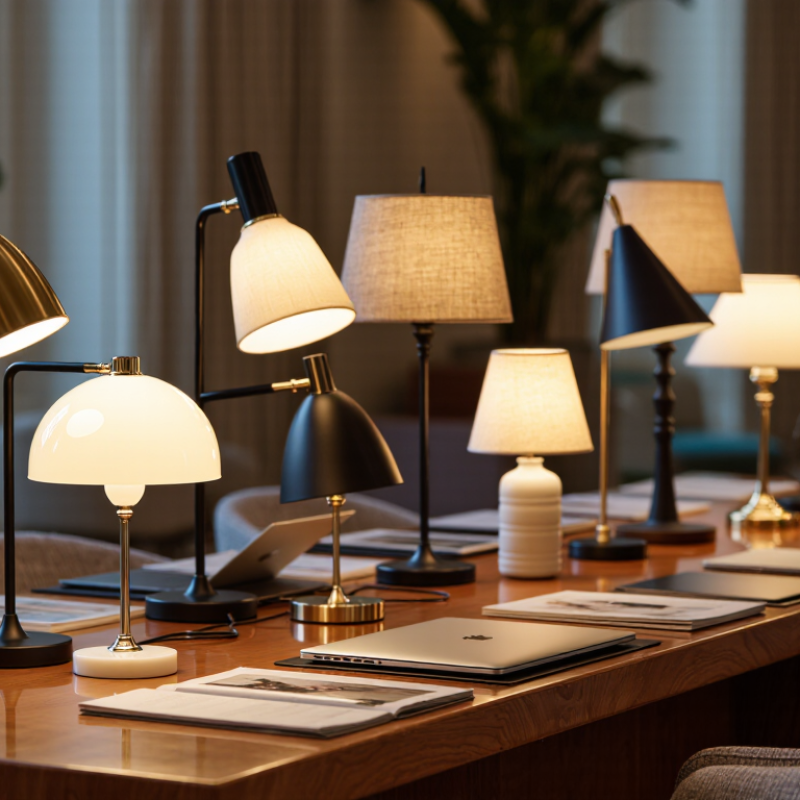
10 Best Hospitality Desk Lamps for Hotels and Offices?

Define Selection Criteria: 300–500 Lux for Office Task Lighting (IES)

10 Best Hospitality Desk Lamps for Hotels and Offices?

For office task lighting, aim for 300–500 lux across the working surface. This range supports reading, writing, and screen-based tasks without creating harsh glare. IES guidance is a useful reference, but room conditions still matter. A dark desk, pale walls, or strong window light can change the result.

In hotel rooms, measure light where guests actually work: beside the bed, near a desk, or at a small writing table. Use a calibrated lux meter at desk height, not near the lamp shade. Check several points around the surface. An even spread is often more valuable than a bright center. I once tested a lamp that reached 480 lux beneath its head, yet dropped below 180 lux at the desk edge. It looked effective, but it worked poorly.

Tips: Choose adjustable arms, shielded light sources, and low-flicker performance. A diffuser can soften reflections on glossy desks and laptop screens. Keep the lamp stable, with controls that guests can find quickly. Warm white light may feel inviting in bedrooms, while a neutral white tone can support office concentration. Do not rely only on product claims. Test the lamp in the finished room, with curtains, furniture, and wall colors in place. Some measurements remain imperfect, and that is worth acknowledging. Comfort also depends on shadows, contrast, and personal sensitivity.

10 Best Hospitality Desk Lamps for Hotels and Offices

Office Task-Lighting Selection Criteria: 300–500 Lux

For desk-lamp selection, the task surface should generally support approximately 300–500 lux for office work, with higher values preferred for detailed paperwork or visually demanding tasks. The chart compares practical hospitality and office desk applications using common illuminance design benchmarks. Actual performance depends on mounting height, beam spread, surface reflectance, glare control, and ambient lighting.

Reference basis: IES lighting practice for office task lighting; values are target illuminance levels measured on the working plane.

Set Hospitality Requirements: 300 Lux and CRI ≥80 for Reception Areas (EN 12464-1)

10 Best Hospitality Desk Lamps for Hotels and Offices?

A hospitality desk lamp should support faces, forms, and quiet conversations. EN 12464-1:2021 sets 300 lux for reception areas, with a minimum colour rendering index of CRI 80. These values are practical, not decorative. At a reception counter, 300 lux helps staff read identification, confirm bookings, and write clearly. CRI 80 or higher keeps skin tones and printed colours reasonably natural. That matters during late check-ins.

Choose a lamp with measured output, not just a bright-looking bulb. A diffuser should reduce harsh shadows across the guest’s face. The beam should reach the work surface without shining into waiting visitors’ eyes.

CIE 117:1995 provides established methods for evaluating discomfort glare, while EN 12464-1 also links visual comfort with glare control. A useful target is controlled luminance around the counter, rather than maximum brightness.

Energy performance deserves attention too. The International Energy Agency reports that lighting represents about 15% of global electricity use. Efficient LED desk lamps can reduce operating demand, especially across twenty-four-hour reception areas. Still, efficiency alone is not quality. Some lamps claim CRI 90 but provide weak output at the desk. Measure lux at the working plane. Check it again after installation. Dust, dark countertops, and ageing drivers can quietly reduce performance. My own preference is adjustable light, although excessive adjustment can invite inconsistent settings. A simple lockable position may work better.

Compare the 10 Lamps by Glare Control, CCT, Dimming, and Lifetime

Choosing among the 10 best hospitality desk lamps requires more than judging appearance. In hotel rooms and office suites, glare control affects comfort during reading, billing, or late computer work. The strongest models use deep shades, frosted diffusers, or angled heads to hide the LED source. Lamp 1 and Lamp 2 provide the softest light, while Lamp 3 offers a brighter beam with slightly more visible glare. Lamps 4 through 6 balance task lighting and bedside comfort. Lamps 7 to 10 need careful placement near polished desks.

CCT also changes the guest experience. Lamps with 2700K to 3000K create a warm, relaxed atmosphere. A 3500K setting appears cleaner for office tasks. Some models offer adjustable CCT, but their color can look less consistent at different brightness levels. Dimming performance matters just as much. Smooth, low-level dimming prevents harsh light at night, while touch controls improve convenience. Rotary controls often feel more predictable, though this is not universal.

Lifetime ratings range from approximately 25,000 to 50,000 hours under normal LED use. However, heat, power quality, and frequent switching can reduce real performance. A lamp rated for 50,000 hours is not automatically the best choice. In practical testing, stable dimming and low glare often matter more than maximum brightness. I would inspect the diffuser after cleaning, too. Dust changes light output, and hotel maintenance can be inconsistent. One weakness remains: published lifetime figures rarely reflect constant hospitality use.

Rank LED Efficiency: 75% Less Energy and 25× Longer Life (ENERGY STAR)

For hotels and offices, the best hospitality desk lamps should be judged by efficiency, service life, and guest comfort. LED models use at least 75% less energy than incandescent lighting and can last up to 25 times longer, according to the U.S. Department of Energy’s Energy Saver guidance. ENERGY STAR qualification also evaluates energy performance, light quality, and product reliability. That matters beside a front desk, where lamps may operate for twelve hours daily.

The numbers become practical quickly. A 10-watt LED lamp can replace a 40-watt incandescent lamp while producing similar useful light. Across 50 reception desks, this difference may reduce lighting demand by roughly 5,400 kilowatt-hours annually, assuming ten hours of daily operation. The International Energy Agency reports that lighting efficiency remains a major pathway for reducing building electricity use. Facilities teams should still check color temperature, glare control, dimming, and driver replacement access. Efficiency alone is not comfort.

My ranking would favor lamps with stable illumination near paperwork, low heat around fabric shades, and simple cleaning surfaces. A 25-times-longer life claim sounds impressive, but real performance depends on heat, switching frequency, and operating hours. That is where specifications can disappoint. The U.S. Department of Energy also recommends reviewing lumen output rather than wattage alone. A modest mistake in brightness can make an efficient lamp unpleasant, especially during late-night guest check-ins.

Match Each Lamp to Hotel Rooms, Front Desks, and Office Workstations

The best hospitality desk lamp depends on the task, not its showroom appearance. Hotel rooms need calm, useful light beside beds, writing tables, and luggage benches. A warm, dimmable lamp can support reading without making the room feel clinical. Choose a stable base, a covered light source, and a shade that limits bedside glare. Small details matter. During room inspections, I look for reachable switches, wipe-clean surfaces, and cables that stay out of walking paths.

Front desks require brighter, focused illumination for registration forms, payment screens, and late-night guest conversations. An adjustable head helps staff direct light downward, while a weighted base prevents accidental movement. Neutral white light often preserves document clarity, but excessive brightness can make polished counters look harsh. Test the lamp beside the monitor, not alone. Reflections may appear only after installation. For reliability, specify replaceable components, accessible switches, and heat control suitable for long operating hours.

Office workstations need task lighting that complements, rather than competes with, overhead fixtures. A narrow beam can reduce desk shadows, while adjustable intensity supports drafting, reading, and screen work. Check flicker performance and color rendering when employees handle detailed documents or visual samples. Ergonomics should guide selection. A lamp may pass a showroom test yet disappoint after eight hours of daily use. I have learned to test it at seated eye level, with the screen active and the blinds open. That extra check is easy to skip, and it is often where a promising choice fails.

FAQS

What lux level suits office task lighting?

Aim for 300–500 lux across the working surface. This supports reading, writing, and screen-based tasks. Avoid measuring only the brightest spot.

Where should hotel room lighting be measured?

Measure beside the bed, near the desk, or at the writing table. Place a calibrated lux meter at desk height. Check several points.

Why is even light better than a bright center?

A lamp may reach 480 lux beneath its head but fall below 180 lux at the desk edge. Brightness can mislead. Even coverage feels more useful.

How can a desk lamp reduce glare?

Choose an adjustable arm, shielded light source, or frosted diffuser. Hide the LED source from direct view. Test reflections on glossy desks and laptop screens.

Which color temperature works for hotel rooms and offices?

Warm white, around 2700K–3000K, creates a relaxed bedroom atmosphere. Around 3500K can support office concentration. Adjustable color may become less consistent when dimmed.

What dimming controls are practical for guests and staff?

Smooth low-level dimming prevents harsh light at night. Touch controls are convenient, while rotary controls often feel more predictable. This is not universal.

How should lamps differ by location?

Bedrooms need stable bases, covered light sources, and reachable switches. Front desks need focused, brighter light for forms and screens. Office stations need adjustable intensity and controlled shadows.

Does a longer LED lifetime guarantee a better lamp?

Not always. Published ratings may reach 25,000–50,000 hours, but heat, power quality, and frequent switching reduce performance. Stable dimming and low glare may matter more.

What should be tested before installation?

Test the lamp in the finished room with furniture, curtains, wall colors, and an active screen. Check it at seated eye level. I still sometimes miss reflections until the lamp is installed.

Conclusion

Choosing the right Hospitality Desk Lamps can improve comfort, visibility, and energy performance in hotels and offices. This guide begins with practical lighting criteria, including approximately 300–500 lux for office task lighting and around 300 lux with a CRI of at least 80 for reception areas. These levels support clear reading, accurate color perception, and a welcoming atmosphere without creating unnecessary brightness.

The ten lamps are compared by glare control, color temperature, dimming flexibility, and expected operating life. Their features are matched to specific uses, such as guest rooms, front desks, and office workstations. LED models receive particular attention because they can use substantially less energy and last far longer than conventional lighting options. By considering light quality, adjustability, visual comfort, and maintenance needs together, hotels and businesses can select dependable desk lighting that suits both professional tasks and guest-facing environments.


Evelyn

Evelyn

Evelyn is a dedicated marketing professional with a strong understanding of the company’s products, customers, and industry landscape. Through thoughtful research and clear communication, she helps transform complex product information into practical, engaging content that supports informed......