Choosing the right Hotel Bedside Wall Sconces can shape a guest’s first impression of a room. In 2026, global buyers are seeking lighting that combines comfort, durability, visual appeal, and responsible sourcing. A well-positioned sconce should provide soft reading light without creating glare across pillows, mirrors, or polished furniture.
This guide examines practical options for hotels, resorts, serviced apartments, and boutique properties. It considers lumen output, color temperature, beam direction, switch placement, material quality, and cleaning requirements. Brass, aluminum, glass, and coated steel can each perform differently in humid coastal locations or high-traffic rooms. Installation depth also matters when beds sit close to the wall.
Small details matter.
Our discussion reflects common hospitality purchasing concerns, including sample testing, supplier communication, replacement parts, and regional electrical requirements. Buyers should confirm voltage compatibility, certification, fire safety documentation, and installation guidance before placing large orders. Local professionals must review final wiring and mounting decisions.
No fixture is perfect. A stylish model may be difficult to clean, while a durable model may feel visually ordinary. That trade-off deserves honest evaluation. Even warm light can feel uncomfortable when the shade is poorly designed. We will compare these practical weaknesses, not only attractive product images, to support more reliable purchasing decisions. The goal is a balanced introduction for international buyers who need bedside lighting that performs consistently, photographs well, and supports a calmer guest experience.
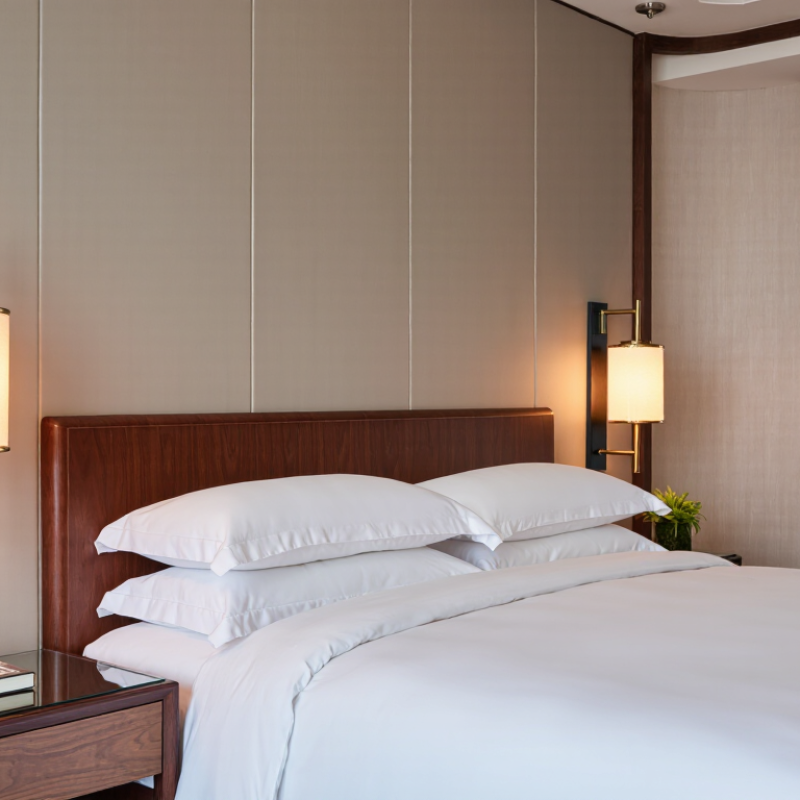
Hotel bedside wall sconces are fixed light fixtures mounted beside or above a bed. They provide focused reading light without occupying the nightstand. In practice, a good sconce should illuminate a book, not the entire room. Adjustable heads, warm color temperature, and separate switching improve comfort. This detail matters because guests often read, charge devices, or move at night.
Energy performance also affects hotel operating costs. The International Energy Agency reports that lighting uses about 15% of global electricity consumption. The U.S. Department of Energy states that LED lighting uses at least 75% less energy and lasts up to 25 times longer than incandescent lighting. For global buyers, these figures support LED selection, but they do not replace local testing. Voltage, wiring systems, fire ratings, and installation standards still require professional review.
Tips: Specify 2700K–3000K light for a softer bedside atmosphere. Keep the switch reachable from the pillow. Choose a shade or diffuser that limits glare. Confirm the fixture’s ingress protection rating for humid rooms. Check replacement parts before ordering. I have seen attractive sconces fail because their switches were too high. That mistake is easy to miss in drawings. Guest feedback may expose it later. A mock-up beside a real bed remains more reliable than a product image.
What hotel bedside wall sconces are and why they matter: a well-designed sconce should provide comfortable reading light without creating excessive glare or disturbing other guests. The reference illuminance targets below are commonly used in hospitality lighting briefs aligned with EN 12464-1 principles.
Reference targets are shown in lux (lx), the standard unit for illuminance. Actual specifications may vary according to room layout, surface reflectance, mounting height, and local regulations.
2026 Best Hotel Bedside Wall Sconces for Global Buyers
Key Features of the Best Hotel Bedside Wall Sconces
In hotel room inspections, bedside sconces often reveal more than decorative quality. A useful fixture places light near the pillow without shining directly into a guest’s eyes. Adjustable shades or swing arms help guests read comfortably from different sleeping positions. A focused beam also reduces glare on glossy books and phones.
Light quality matters at night. A warm color temperature around 2700K to 3000K usually supports a calmer room atmosphere. A high color rendering index helps guests see clothing, skin tones, and printed text more naturally. Dimming is valuable, but the control must feel simple. Guests should not search for it in darkness.
Small details affect daily maintenance. Choose durable metal finishes, concealed wiring, and smooth surfaces that housekeeping staff can wipe quickly. A stable wall plate prevents movement after repeated use. An integrated USB or charging outlet can improve convenience, if local electrical requirements permit it. Global buyers should confirm voltage, frequency, insulation, and required safety testing before ordering.
Do not overlook heat. An attractive lamp can still become uncomfortable beside a pillow. I have seen prototypes with excellent brightness but poor switch placement. That mistake is easy to miss in a showroom. Sample-room testing should include nighttime reading, cleaning, child-safe reach distances, and several mattress heights. Even then, preferences differ between markets, so one universal design may need adjustment.
For global hotel buyers, bedside sconces should be compared as working tools, not decorative objects. I test style against the room’s visual language. Slim metal arms suit compact rooms, while fabric shades soften large headboards. Adjustable reading sconces often serve guests better than fixed decorative lights. Yet a beautiful silhouette can cast an awkward shadow. I once underestimated this during a sample review. The fixture looked elegant, but its switch sat behind the pillow.
Tips: Request samples before volume orders. Test reading at 40–60 centimeters from the pillow. Compare warm color temperatures, dimming range, glare, and beam direction. Check whether the diffuser feels hot after several hours. Confirm voltage options, lamp replacement, mounting depth, and destination-market documentation. Small details matter.
Material choice affects appearance and maintenance. Powder-coated steel handles frequent cleaning well, while brass adds warmth but may show fingerprints. Glass diffusers create softer light, although fragile edges need careful packaging.
Light performance deserves measured evidence. Ask for lumen output, color-rendering data, and flicker information, rather than trusting photographs. A 2700K setting may feel restful, but some rooms need clearer reading light. Specifications can vary between batches, so approve a production sample, not only a catalogue sheet. That is the safer decision.
2026 Best Hotel Bedside Wall Sconces for Global Buyers
Safety begins behind the decorative shade. IEC 60598-1 addresses electric shock protection, thermal safety, mechanical strength, and luminaire construction. Buyers should request current test reports, wiring diagrams, insulation details, and a clear installation manual. The fixture must match the hotel’s voltage, frequency, earthing system, and local approval requirements. A certificate alone is not enough.
Installation details affect both safety and guest experience. Mounting plates should sit firmly on suitable wall boxes, with concealed cables and strain relief. Switches need comfortable reach from the pillow, while hot surfaces should remain away from curtains and bedding. In humid bathrooms or coastal properties, confirm the required ingress protection rating. Qualified electricians should verify polarity, grounding, load capacity, and final insulation resistance. Small omissions can become expensive.
The UNEP Global Status Report for Buildings and Construction 2024 states that buildings consume about 32% of global energy and produce approximately 34% of global carbon emissions. Efficient bedside lighting supports wider hotel performance goals, but claimed wattage savings need measured evidence. Ask for photometric files, lifetime testing, color consistency data, and dimming compatibility. I would not assume one installation method suits every country. Local codes, wall construction, and maintenance habits can differ sharply. A practical sample installation often reveals problems that paperwork misses.
For global hotel buyers, a reliable supplier matters more than a polished product image. The U.S. Department of Energy reports that LED lighting uses at least 75% less energy and lasts up to 25 times longer than incandescent lighting. Ask suppliers for verified lumen output, wattage, color temperature, CRI, dimming compatibility, and tested lifetime data. Request samples before approving large quantities. A bedside wall sconce should provide soft reading light without shining into a guest’s eyes.
Supplier checks need practical evidence. Review factory audit records, quality-control procedures, material declarations, and production capacity. Confirm compliance with IEC 60598 requirements and obtain test reports from an independent laboratory. For international projects, verify voltage options, plug-free wiring, emergency documentation, and packaging performance. The International Energy Agency continues to identify efficient lighting as a major energy-saving opportunity, but poor drivers can reduce real performance. Numbers on a quotation are not enough.
Inspect one sample in a mock-up room. Check switch reach, wall shadows, heat near the headboard, and cleaning access. I would not rely only on a supplier’s first sample. Finishes can vary between batches. That is uncomfortable, but realistic. Specify tolerance limits, spare components, warranty response times, and replacement availability in the purchase contract. Hotel operators should also compare lead times against opening schedules. A cheaper fitting can become expensive when a missing driver delays an entire floor.
It is a fixed light mounted beside or above the bed. It provides focused reading light without using nightstand space. The best models light a book, not the whole room.
Choose a warm color temperature around 2700K to 3000K. It creates a softer nighttime atmosphere. Extremely bright or cool light may feel harsh.
Keep the switch reachable from the pillow. Guests should find it without leaving bed. A beautiful fixture can still fail here. I have seen switches installed too high.
Use an adjustable shade, diffuser, or swing arm. The light should reach the page without shining into the guest’s eyes. Test it with a book and a phone.
Confirm voltage, frequency, wiring, insulation, and local safety requirements. Professional review remains necessary. Product descriptions cannot replace testing.
LED lighting generally uses much less energy than incandescent lighting. It also lasts considerably longer. However, poor drivers can reduce actual performance. Ask for verified wattage, lumen output, and lifetime data.
Request samples, quality-control records, material information, and independent test reports. Review production capacity and packaging performance. A polished product image is not enough.
Test nighttime reading, switch reach, wall shadows, heat, cleaning access, and different mattress heights. Check the fixture beside a real bed. A photograph cannot show everything.
Choose smooth surfaces and concealed wiring for easier cleaning. Confirm replacement parts before ordering. Specify finish tolerances, spare components, warranty response times, and replacement availability.
Not always. Guest preferences, electrical systems, and room layouts differ. One universal design may need adjustment. That is inconvenient, but realistic.
Hotel Bedside Wall Sconces are essential lighting fixtures for modern hospitality spaces, combining practical reading light with comfort, style, and efficient use of room space. The best models should provide adjustable brightness, suitable color temperature, glare control, durable construction, easy maintenance, and useful features such as USB charging or integrated switches. Global buyers should compare designs, materials, finishes, beam angles, and light performance to ensure the sconces match the hotel’s interior concept while delivering reliable illumination for guests.
Safety and installation requirements are equally important. Buyers should confirm electrical compatibility, heat management, insulation, mounting methods, and relevant regional certifications before placing an order. Reliable suppliers should offer consistent quality, clear technical specifications, customization options, stable production capacity, and responsive after-sales support. In 2026, selecting the right model means balancing appearance, performance, guest convenience, installation efficiency, compliance, and long-term operating value.